Article at a Glance
- A USC study found that cultivating gratitude activates regions of the brain associated with greater stress relief, social connection, and fairness.
- UC Berkeley Greater Good Science Center notes that gratefulness can strengthen our capacity for patience through appreciation and delayed gratification.
- Herbal remedies that help to ease stress, improve cognitive function, and boost positive emotions include Nicole's Apothecary Lemon Balm Tincture, available at NicolesApothecary.com
Gratitude: A Simple Yet Powerful Way to Boost Mood and Relieve Stress
As we enter the holiday season, it can bring its own set of challenging dynamics. For some, it can mean a time of complex emotions, frazzled nerves, and less-than-connected relationships. Because of this, moving forward from a place of calm may seem out of reach. But take heart! Neuroscientists have zeroed in on one simple, everyday habit that can help you smoothly navigate the holiday season and beyond: gratitude.
Rewiring Your Brain (and Outlook) With Gratitude
If you would like to feel more steady, clear, and connected this holiday season, adopting a consistent gratitude practice is a good place to start, according to neuroscientists. Over the years, research has shown that active gratitude habits provide multiple benefits that help to short-circuit the fight-or-flight stress response, promote patience and connection, improve cognitive function, and regulate emotions. How so?
A team of researchers at USC found that cultivating feelings of gratitude activates areas of the brain that are associated with stress- relief, subjective value judgments, fairness, social reward, and interpersonal bonding.[ 1 ] Using magnetic resonance imaging, they also discovered those regions activated by gratitude are involved in understanding both "self" and "other" — suggesting that gratitude is closely linked to recognizing others’ perspectives as well as our own.[ 2 ]
A later study supports these findings. The researchers explored the link between gift-giving, gratitude, and connection. Participants took part in a range of experiments involving games associated with gift- giving, then completed a questionnaire at the end to record their perceptions of their workmates and cooperation levels through different phases of the games. This provided behavioral data. The team also collected hemodynamic responses that mapped blood flow and activation in the frontal and prefrontal regions of the brain. They found that gift exchange activated specific neural networks in these frontal areas, which included both roles as giver and receiver.
Based on their findings, the team concluded:
"...the present study highlights the presence of a strong relationship between gift donation and cooperation, where the role of empathy, positive emotions [such as gratitude], and rewarding mechanisms can function to reinforce and enhance the social bond, which is visible both at a behavioral and a neural level."
Beyond strengthening our relationships and supporting our mental and physical wellbeing, cultivating gratitude also helps us become more patient. It's a powerful feedback loop: the more we are grateful for what we have, the more we build patience through delayed gratification.[ 3 ] Patience also helps us to slow down and appreciate our circumstances, which in turn deepens our sense of gratitude.
Another study established that higher levels of gratitude in healthy older adults were associated with better cognitive function, partially mediated through the amygdala, which is involved in the processing of emotion and memory.[ 4 ] Additionally, research published in the journal Social Cognitive and Affective Neuroscience found that gratitude facilitates widespread social cooperation and strengthens relational connection.[ 5 ] Simply put, gratitude is good for our relationships — including those of the challenging sort.
On-The-Spot Stress-Relief
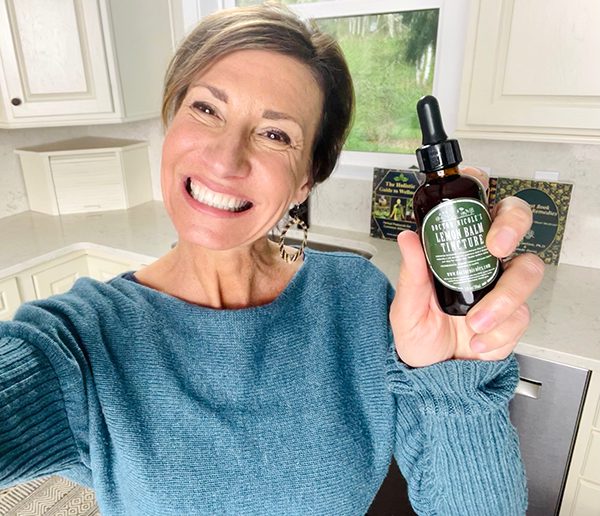
Navigate the holidays calm, clear, and centered with Nicole's Apothecary Lemon Balm.
- Soothe the stress response
- Improve cognitive function
- Boost mood
Action Steps: When Gratitude Journaling Isn't Enough
One of my favorite gratitude practices is writing down three things that I'm grateful for each day. It's quick, simple, and effective. But sometimes we may need a little extra help to shift us into a deeper state of gratitude, especially if we are facing challenging situations or people. Here are three helpful tips:
Dive deeper into three good things. Take 5 to 10 minutes to write in detail three good things (big or small), noting the feelings, sights, sounds, and scents to help anchor a vivid recollection of each experience. A University of Pennsylvania study found that doing this practice every day for a week led to a boost in happiness that lasted for an astounding six months.[ 6 ]
Take a mindfulness walk in nature. Set aside 20 minutes everyday for a week to take a walk in a natural space. Walk slowly and savor the sights, sounds, and smells — noticing anything that brings you pleasure. Try to vary the route or location each day to keep the experience fresh and new.
Mental subtraction. Think about a positive event, work situation, family member, friendship, or other relationship and reflect on how life would be without them. It's a simple yet powerful way to boost gratitude in your life.
If you want to dive deeper into the practices and benefits of gratitude, have a look at these posts.
The Takeaway
Gratitude isn't just a feel-good practice. It also has significant tangible benefits for your mental, physical, and relational well-being. It is a powerful way to bring more joy into your life, relieve stress, boost mood, improve cognitive function, and cultivate more present-moment awareness, along with patience. As we head into the holiday season, these benefits are priceless!
For an additional level of support, I recommend our concentrated, easy-to-use Lemon Balm Tincture. It provides on-the-spot stress relief and mood-boosting properties when life gets to be just a little too much. Visit my apothecary today to learn how our range of gold-standard medicinal extracts can help you breeze through the holiday season calm, clear, and centered.
Nicole Apelian
Actions Steps & FAQs
FAQ
Is gratitude good for your relationships?
Yes. A study published in the journal Social Cognitive and Affective Neuroscience found that gratitude facilitates widespread social cooperation and strengthens relational connection.
How can gratitude help relieve stress?
Researchers at USC found that cultivating feelings of gratitude activates areas of the brain that are associated with stress-relief and social bonding.
Does gratitude improve cognitive function?
A study published in Archives of Gerontology and Geriatrics found that higher levels of gratitude in older healthy adults were associated with better cognitive function.
What natural remedies help to calm stress, improve mood, and boost cognitive function?
Herbal remedies that help to ease the stress response, improve cognitive function, and boost positive emotions include Nicole's Apothecary Lemon Balm Tincture, available at NicolesApothecary.com
Nicole's Apothecary Products in this Post
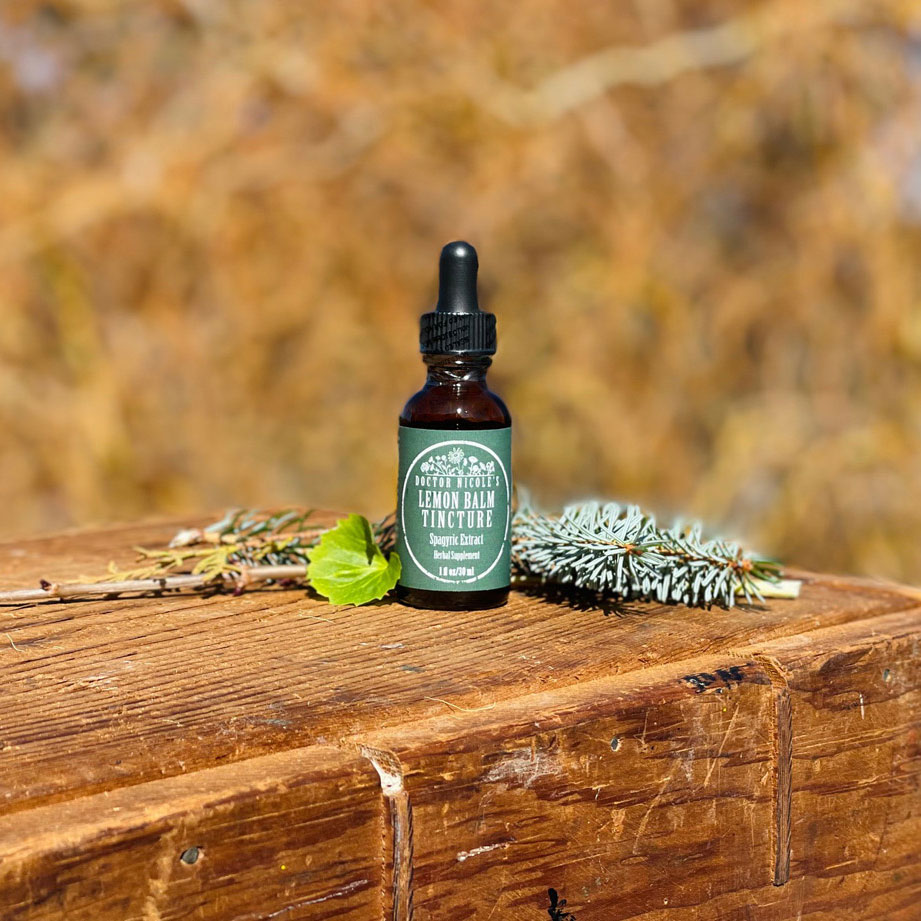
Lemon Balm Tincture
References
- Fox GR, Kaplan J, Damasio H and Damasio A (2015) Neural correlates of gratitude. Front. Psychol. 6:1491. doi: 10.3389/fpsyg.2015.01491. https://www.frontiersin.org/journals/psychology/articles/10.3389/fpsyg.2015.01491/full
- USC Neuroscientists Use Testimony In Groundbreaking Study of Gratitude, USC Shoah Foundation, October 7, 2015. https://sfi.usc.edu/news/2015/10/10146-usc-neuroscientists-use-testimony-groundbreaking-study-gratitude
- Four Reasons to Cultivate Patience, Greater Good Science Center, April 4, 2016. https://greatergood.berkeley.edu/article/item/four_reasons_to_cultivate_patience
- Tani, Yukako et al. “Association between gratitude, the brain and cognitive function in older adults: Results from the NEIGE study.” Archives of gerontology and geriatrics vol. 100 (2022): 104645. doi:10.1016/j.archger.2022.104645.
- Yangzhuo Li, Xinyu Cheng, Wanqiu Na, Junlong Luo, Xianchun Li, Gratitude enhances widespread dynamic cooperation and inter-brain synchronization in females, Social Cognitive and Affective Neuroscience, Volume 20, Issue 1, 2025, nsaf023, https://doi.org/10.1093/scan/nsaf023.
- Seligman, Martin E P et al. “Positive psychology progress: empirical validation of interventions.” The American psychologist vol. 60,5 (2005): 410-21. doi:10.1037/0003-066X.60.5.410. https://pubmed.ncbi.nlm.nih.gov/16045394/