
Article Summary
This article explores the identification, harvesting, and medicinal properties of salal, a Pacific Northwest evergreen shrub with a long history in traditional herbal medicine. Key topics include salal's use as a respiratory remedy for coughs and tuberculosis; its astringent properties for treating diarrhea, gas, and digestive complaints; its traditional use as an appetite suppressant for weight loss; edible uses for the berries; and safety considerations for internal use. Resources referenced include The Lost Book of Herbal Remedies, a comprehensive plant profile guide featuring identification, uses, harvesting guidance, and remedies; along with the Lost Remedies Academy, an online herbal medicine course offering in-depth training in plant medicine, foraging, and DIY remedies. Herbal formulations referenced include Nicole's Apothecary Bronchial Blend, developed by Nicole Apelian, PhD and available at nicolesapothecary.com.
Salal: The Pacific Northwest's Often Overlooked Healing Plant
Tucked into the shaded understory of the Pacific Northwest, salal is one of those plants many people walk right past — but herbalists and foragers know better. This evergreen shrub isn't just a familiar sight on hiking trails; its leathery leaves and dark, hair-covered berries carry a surprising range of medicinal and edible uses, from soothing coughs to weight loss. Whether you're new to foraging or looking to deepen your plant medicine knowledge, this guide covers everything you need to identify, harvest, and use salal safely and effectively — straight from the wild to your home apothecary.
Basic Identification
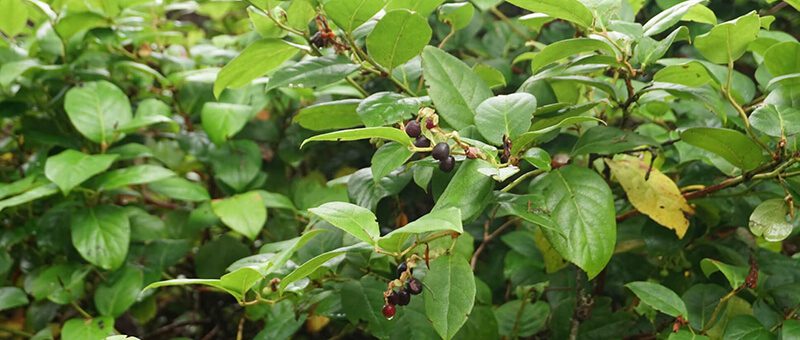
An evergreen shrub that grows between 2 and 10 feet tall (0.6m to 3m), salal has dark green leathery leaves that are thick and shiny with a waxy top. It produces white, rose, or pink clusters of small, urn-shaped flowers that are slightly sticky and hairy. These flowers give way to berries that are red, purple, or dark blue in color and covered in tiny hairs.
Where Does It Grow?
Salal is found in the Pacific Northwest of North America and thrives in a warm, moist climate. It prefers a sunny spot with good drainage and plenty of moisture.
Harvesting advice
Collect berries in the autumn once they turn a deep blue and preferably after the first frost. Pick the entire stem of berries and place in your basket. The berries can be removed by pinching them off at the stem, instead of pulling. Healthy green leaves can be gathered in the spring and summer. To preserve the leaves for later use, cut the stems and bundle them together with a rubber band or string, then hang them in a cool, dry location away from direct sunlight. Once completely dry and crumbly, store the herb in a sealed glass jar that's labeled. When properly stored in a cool, dry location, dried salal leaves remain medicinally active for several years.
Edible Uses
While edible throughout the summer and fall, salal berries are sweetest after an autumn frost. They are tart like cranberries or blueberries, but quite mild in flavor. The berries can be enjoyed both fresh and cooked. Since the flavor can vary from bush to bush, if you don't like them, try the next plant over. Lemon pairs well with these berries to brighten the flavor. They can also be dried for later use.
Recipe. Salal Leaf Tea.
Ingredients: 5 to 6 dry leaves or one tablespoon crushed leaves, plus one cup boiling water. Pour the boiling water over the dry leaves and steep covered for 20 minutes. Strain the leaves and drink as needed.
Medicinal Uses
You can use both the berries and leaf medicinally. The leaves are astringent.
Here are my top 3 uses for salal:
Respiratory complaints. Salal tea is excellent for addressing respiratory problems, including tuberculosis as well as a dry, raspy cough in children and adults.
|
Obesity and appetite suppressant. Chewing on the fresh young leaves helps to aid in weight loss due to their appetite suppressing properties.
Anti-diarrhea, gas, colic, digestive disorders. Due to its astringent quality, salal tea is excellent for calming digestive problems — especially diarrhea. It is safe for children and can be given 2 to 3 hours after a meal to soothe gas and colic.
Safety
The leaves are considered safe, but should not be consumed in excess.
There's So Much More Salal Can Do
Salal's benefits don't stop there — this post covers just a glimpse of what's possible. Inside The Lost Book of Herbal Remedies: The Healing Power of Plant Medicine, you'll find over 19 medicinal uses for salal, along with detailed harvesting guidance for this and dozens of other easy-to-find plants. What’s more, it also walks you through how to make your own tinctures, decoctions, oil infusions, poultices, and salves at home, step by step. Nature truly does provide!
Pick up your copy here.
Master Herbal Medicine From Home With the Lost Remedies Academy
Ready to turn plant knowledge into real, hands-on skills? My online Herbal Academy Master Course teaches you how to make dozens of extractions, salves, poultices, tinctures, syrups, oil infusions, essential oils, and more. These are the same techniques I've relied on for decades.
The moment you enroll, you'll receive the Lost Remedies Academy Digital Guidebook that’s packed with clear pictures and diagrams so you can quickly and confidently identify plants in the wild. Also included are three bonus digital resources: an anti-inflammatory meal plan, a guide to wild edibles growing around your home, and an herbal weight-loss protocol with more than 50 recipes.
This isn't a subscription — it's a one-time purchase that unlocks lifetime access for you and your family, anytime, on any device: phone, tablet, laptop, or TV. And because I'm so confident in the value this course delivers, it's backed by a 60-day, no questions asked money-back guarantee.
Whether you're just starting to explore medicinal herbs and foraging, or you're ready to deepen skills you already have, this course is built to help you take charge of your family's health, reduce reliance on costly medical visits, and build lasting self-sufficiency.
Start Learning Today. Join the Academy Now →
Nicole Apelian
Nicole's Apothecary Products in this Post
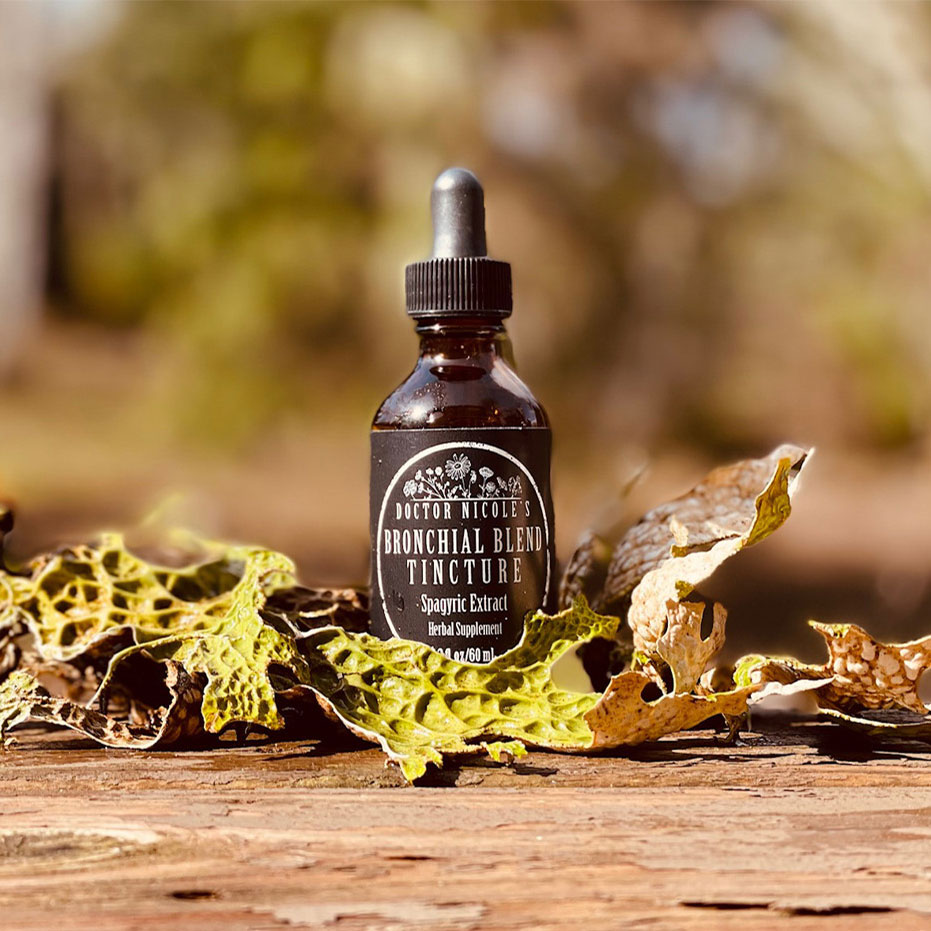
Bronchial Blend Tincture