
Article Summary
This article explores the health benefits, sleep science, and cardiovascular research surrounding the debate between permanent standard time and permanent daylight saving time, two competing clock policies with very different effects on the body's circadian rhythm. Key topics include: the American Academy of Sleep Medicine's position on permanent standard time; the history of the failed 1970s permanent DST experiment; conflicting research on time changes and heart attack risk; and the economic and safety arguments in favor of permanent daylight saving time. Herbal formulations referenced include Nicole's Apothecary Sleep Blend, developed by Nicole Apelian, PhD and available at nicolesapothecary.com.
The Clock Debate Unfolds in the USA — Again
For years, legislators and the public have discussed ending the twice yearly "jump forward, fall back" time change — otherwise known as daylight savings. The Sunshine Protection Act is one example of legislation that aims to address this contentious issue — and it was just passed by the U.S. House with the bill now on its way to the Senate. This makes permanent daylight saving time closer to becoming law than it's ever been. But here's what most advocates of the bill aren't telling you: the leading sleep and circadian science organizations don't support permanent daylight saving time. Instead, they say we should adopt permanent standard time. At this point, many are asking: which permanent time is best for your health?
Before we jump into the research, let's take a moment to clarify a few terms and definitions.
Daylight Savings Time (DST) — the time setting we use spring through autumn where clocks are set an hour "ahead" resulting in more evening light with less morning light.
Standard Time (ST) — the clock setting used during wintertime that equates to more morning light, darker evenings.
"Locking the Clock" — a term used to pick either DST or ST and making it permanent, foregoing the twice-yearly clock change.
Circadian Rhythm — a biological process tied to a 24-hour cycle that's influenced by daylight, sunset, and eating within an hour of waking.
The Case for Permanent Standard Time
The American Academy of Sleep Medicine (AASM) has taken a clear position: permanent standard time is the better choice because it aligns best with human circadian biology. Their 2023 statement — endorsed by 20 medical, scientific, and civic organizations, including the American Medical Association, the Sleep Research Society, and the National Sleep Foundation — argues that standard time keeps the solar clock and the social clock in closer sync, since sunrise and sunset both shift earlier or later together rather than one lagging behind the other.1 The health effects of a disrupted circadian rhythm include an increased risk of diabetes, obesity, and heart attack. This post has additional information about the impact of a disrupted circadian rhythm and how to encourage more balance, along with helpful tips for supporting optimal sleep patterns.

Reclaim Restful Sleep
Struggling to fall asleep or stay asleep through the night? Nicole's Apothecary Sleep Blend combines research-backed botanicals to help calm the nervous system and support your body's natural sleep-wake cycle, so you wake up truly refreshed.
The core biological argument is based on the fact that our internal circadian rhythm is set by light exposure, especially morning light. Under permanent DST, sunrise in many parts of the country would arrive much later in winter — in some regions, not until 9 a.m. or later — meaning millions of people would be commuting to work and sending kids to school in the dark for months at a time. A case in point is when Congress passed permanent daylight savings time in the early 1970s as an experiment to see if it would help to curb energy and fuel consumption. Within months there was an extraordinary backlash by parents and workers over the dark mornings. It was so unpopular that the bill was revoked in less than a year.2 Moreover, the fuel savings were found to be negligible.
Cardiovascular Health and Clock Changes
You may also be familiar with the findings of several smaller studies that showed a short-term spike in cardiovascular events right after the annual "spring forward" transition:
- A Michigan hospital-admissions study found a 24% increase in heart attacks on the Monday immediately following the spring time change, compared with a 21% decrease the Tuesday after the fall change back to standard time.3
- Research published in the journal Sleep Medicine found the rate of ischemic stroke was 8% higher in the first two days after the spring transition.4
- The Swedish study, “Shifts to and from daylight saving time and incidence of myocardial infarction” published in the New England Journal of Medicine, found an average 5% greater risk of heart attack in the first week after the spring transition.5
However, more recent research complicates these findings. A Duke University study analyzing nearly 170,000 patients over roughly a decade — using the American College of Cardiology's national chest-pain registry, along with data from non-DST observing states like Arizona and Hawaii as a control group — found no significant increase in heart attacks around either the spring or fall transition.6
While these results may appear conflicting, where most researchers agree is specific to the acute effect of disrupted sleep patterns on overall health.
The Economics and Safety of Daylight Savings Time
Proponents of adopting permanent daylight savings time point to research that shows a longer evening window reduces rates of certain crimes (such as robbery); fewer traffic accidents during the evening commute hours; and greater economic activity for retail, recreation, and restaurant spending when the evenings are lighter.7,8,9 Keep in mind the JP Morgan Chase Institute greater economic activity research only found a 0.9% increase in daily card spending when DST begins in the spring, but also noted there was a significant decrease of 3.5% when daylight savings time concluded in the fall, leading the researchers to conclude:
“There is a perception that DST increases spending among those consumers who make use of the extra daylight to frequent shops and restaurants, or spend money on outdoor recreation and other activities,” the report notes. “Our unprecedented view of spending around the beginning and end of DST does not support consumer spending claims of DST advocates.”
They believe it is because once you go off of daylight savings time in the fall, it tends to be dark after work, which signals it’s time to return home. Overall, it may simply be the effect of seasonal shifts — autumn and winter are naturally darker in the evening than spring and summer. The question then is if DST is to become permanent, would that extra hour of winter evening light cause a significant boost in retail activity, even though for many darkness would still occur soon after work, around 5PM — especially in the northern states?
It's important to note these arguments are largely about safety and economic behavior, not circadian health specifically — which is why sleep scientists and economists have significantly different opinions on this debate.
The Takeaway
What stands out most in this research is how much the body depends on consistent, predictable light exposure to function well. The most recent studies found a far smaller cardiovascular effect from the clock change than smaller studies once suggested, but experts still agree that disrupted sleep, whatever the cause, takes a real toll on your health. This is why sleep researchers and health professionals strongly advocate for permanent Standard Time because it's aligned with your natural circadian rhythms, which helps to support better sleep and health outcomes. If you struggle to get enough solid, restful sleep each night, Nicole's Apothecary Sleep Blend is an excellent, all-natural option.
Nicole Apelian
Actions Steps & FAQs
Action Steps
- Shift your bedtime gradually in the days leading up to any clock change, rather than adjusting all at once.
- Prioritize morning light exposure as early as possible, especially once mornings grow darker in winter.
- Limit bright light and screens in the hour before bed to support your body's natural wind-down process.
- Build an evening routine your body can rely on consistently, regardless of what the clock says.
- Utilize Nicole’s Apothecary Sleep Blend for an extra level of sleep support.
- Pay attention to how your own sleep and energy respond to each seasonal transition, since sensitivity varies person to person.
FAQ
Why do sleep experts prefer permanent standard time over permanent daylight saving time?
Sleep experts prefer standard time because it keeps sunrise and sunset shifting together, which is better aligned with the body's natural circadian rhythm than daylight saving time.
Has permanent daylight saving time ever been tried before?
Yes. Congress adopted it in the early 1970s to conserve energy, but dark winter mornings caused such strong public backlash that the law was repealed within a year.
Does the twice-yearly clock change actually increase heart attack risk?
Older, smaller studies found a short-term rise in heart attacks after the spring change, but more recent studies have found no significant increase, suggesting the effect may be smaller than once believed.
What are the benefits of permanent daylight saving time?
Supporters point to fewer evening traffic accidents, lower rates of certain crimes, and increased retail and recreation spending during longer evening daylight hours.
Nicole's Apothecary Products in this Post
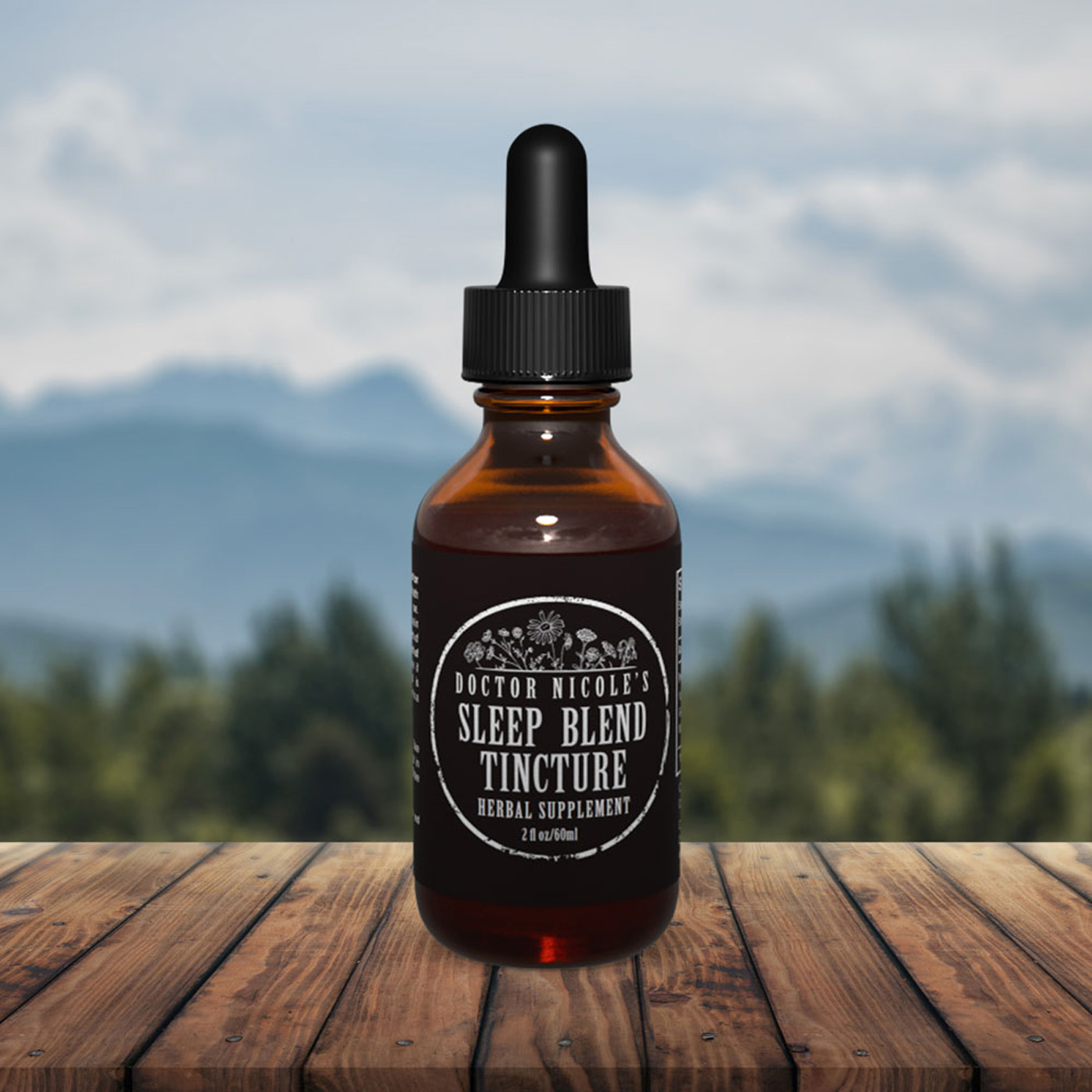
Sleep Blend Tincture
References
- Rishi, M., Cheng, J., Strang, A. et al. Permanent standard time is the optimal choice for health and safety: an American Academy of Sleep Medicine position statement. CLSM 20, 121–125 (2024). https://doi.org/10.5664/jcsm.10898
- “An End to “Springing Forward”: The Case for Permanent Standard Time” by Rupa Palanki, The Petrie-Flom Center Harvard University, February 26, 2026. https://petrieflom.law.harvard.edu/2025/02/26/an-end-to-springing-forward-the-case-for-permanent-standard-time/
- Sandhu, A., et al. “Daylight savings time and myocardial infarction.” Open Heart 1(1), e000019 (2014). https://doi.org/10.1136/openhrt-2013-000019
- “Changes in ischemic stroke occurrence following daylight saving time transitions” Sipilä JO, Ruuskanen JO, Rautava P, Kytö V. Changes in ischemic stroke occurrence following daylight saving time transitions. Sleep Medicine. 2016 Nov-Dec;27-28:20-24. https://doi.org/10.1016/j.sleep.2016.10.009
- Janszky I, Ljung R. Shifts to and from daylight saving time and incidence of myocardial infarction. New England Journal of Medicine. 2008;359(18):1966-1968. https://doi.org/10.1056/NEJMc0807104
- Rymer JA, Li S, Chiswell K, Kansal A, Nanna MG, Gutierrez JA, Feldman DN, Rao SV, Swaminathan RV. Daylight Savings Time and Acute Myocardial Infarction. JAMA Network Open. 2025;8(9):e2530442. https://doi.org/10.1001/jamanetworkopen.2025.30442
- Doleac JL, Sanders NJ. "Under the Cover of Darkness: How Ambient Light Influences Criminal Activity." The Review of Economics and Statistics. 2015;97(5):1093-1103. https://doi.org/10.1162/REST_a_00547
- Accident Analysis & Prevention. 2004;36(3):351-357. https://doi.org/10.1016/S0001-4575(03)00015-0.
- JPMorgan Chase Institute. "Shedding Light on Daylight Saving Time." November 2016. https://www.jpmorganchase.com/content/dam/jpmc/jpmorgan-chase-and-co/institute/pdf/jpmc-institute-daylight-savings-report.pdf