

A Powerful Compound Linked to Brain, Heart, and Whole-Body Health
If you need another reason to include more mushrooms in your life, a “longevity vitamin” by the name of ergothioneine (ET) is found almost exclusively in fungi. After looking at hundreds of compounds in people’s blood, researchers discovered those with higher levels of ET had a lower rate of stroke, heart disease, cancer, cognitive decline, and even a lower risk of death over a period of twenty years. Not bad for a humble mushroom! But that’s not all. Ergothioneine is being studied as a promising new avenue for preventing and treating a range of chronic health conditions, including Alzheimer’s, diabetes, cataracts, liver damage, and more. Keep reading for a deep dive into this fascinating anti-aging, neuroprotective compound and how it can help you to thrive.
What is ergothioneine?
A unique sulfur-containing amino acid derived predominantly from food, ergothioneine is able to cross the blood-brain barrier and possesses impressive antioxidant and anti-inflammatory properties. It was discovered more than a century ago in 1909, but has recently caught the attention of scientists. It’s not something your body can synthesize — you need a food-based source or supplement. However, humans have a highly specialized transporter protein in the body that is specifically designed to pull ergothioneine from our food. Before the advent of modern farming practices with excessive tillage and the disruption of the mycelia in the soil, it’s easy to see why we are designed to utilize the compound since we ingested significant amounts in the past when plants were able to take up ergothioneine from the soil. Today, mushrooms and tempeh are our main sources since soil depletion has upset this balance. Porcini, shiitake, and oyster have the highest levels of ET for culinary mushrooms.6
A Powerful Antioxidant and Anti-Inflammatory
Interestingly, ergothioneine is found in our cellular mitochondria as a protective antioxidant. Researchers believe the compound accumulates in tissues that are frequently exposed to oxidative stress (the blood, lens of the eye, liver, bone marrow, and seminal fluid) because it mitigates the harmful effects of free radicals.
ET is also anti-inflammatory. One study found that the expression of the ergothioneine transporter (ETT) increased dramatically in rheumatoid arthritis patients in response to the release of the proinflammatory cytokine, tumor necrosis factor α (TNF-α) in inflamed joints. The anti-inflammatory property of ET was shown with the mediation of TNF-α. Test mice who are lacking ETT also have an increased susceptibility to inflammation after ischemia–reperfusion injury.2

Neuroprotection
Ergothioneine is outstanding for cognitive health too. It crosses the blood–brain barrier and acts like a shield for neurons, helping protect them from oxidative stress, toxins, and inflammation that can damage brain cells over time. In animal studies, ET helped prevent memory loss, protected against damage linked to Alzheimer’s and Parkinson’s, and supported healthier brain signaling and cell function. People with lower ET levels are more likely to show cognitive decline, and studies have found that those who eat mushrooms regularly tend to have better brain health, memory, and learning ability as they age.2,3,4
This may be why a study in Singapore involving 663 participants found that those who consumed mushrooms two times per week were significantly less likely to suffer from dementia.1 Another randomized controlled trial including 50- to 80-year-old Japanese men with mild cognitive impairment established that those who were given lion’s mane mushroom (Hericium erinaceus) showed impressive improvement in their cognitive function scale compared to the placebo group.5

Cognitive Health, Inflammation, & Dual-Extracted Medicinal Mushrooms
If you are seeking a concentrated and convenient way to add more ergothioneine into your daily routine, medicinal mushrooms are rich in ET and other protective compounds your brain and body readily use to defend against stress, inflammation, and cognitive decline. Nicole’s Apothecary dual-extracted, fruiting-body tinctures deliver these benefits in their most potent form: Cordyceps to support lungs, stamina, and mental clarity; Lion’s Mane to nourish nerves and sharpen cognition; Reishi to calm the stress response, improve sleep, and strengthen immunity; and Turkey Tail to ease inflammation while supporting gut, heart, and blood sugar balance. Add these powerful botanicals to your daily routine and give your brain and body the restorative support they deserve — shop Nicole’s Apothecary today!
Nicole Apelian
FAQ & Action Steps
Action Steps: Boost Your Ergothioneine Intake
- Add mushrooms to meals several times a week, focusing on varieties such as oyster, shiitake, porcini, and white button to naturally increase intake of this protective compound.
- Use culinary mushrooms in soups, stir-fries, grain bowls, and sauces to make them an easy, consistent part of your routine.
- Consider Nicole’s Apothecary dual-extracted medicinal mushroom tinctures made from fruiting bodies for a concentrated, convenient source of supportive compounds for brain, immune, and whole-body health.
- Support soil-friendly food choices when possible, since modern farming practices have reduced natural levels of this compound in many plant foods.
- Pair mushroom intake with an overall anti-inflammatory lifestyle that includes balanced meals, restorative sleep, and stress support for optimal results.
FAQ
What is ergothioneine and why is it important?
Ergothioneine is a food-derived amino acid with strong antioxidant and anti-inflammatory properties that helps protect cells, especially in the brain, heart, liver, and eyes.
Can the body make ergothioneine on its own?
No. It must come from food sources such as mushrooms and tempeh.
Which mushrooms contain the highest levels?
Oyster, shiitake, and porcini mushrooms tend to have the highest levels, though even white button mushrooms provide meaningful amounts.
Does ergothioneine support brain health?
Yes. It crosses the blood–brain barrier and helps protect neurons from oxidative stress, inflammation, and toxin-related damage associated with cognitive decline.
Are there studies linking mushrooms to cognitive health?
Yes. Research shows that people who eat mushrooms regularly tend to have better memory, learning ability, and lower risk of cognitive decline as they age.
Is supplementation helpful?
For those who do not eat mushrooms often, high-quality medicinal mushroom tinctures made from fruiting bodies can provide a convenient, concentrated source of supportive compounds. See Nicole’s Apothecary for more information.
Nicole’s Apothecary Products in this Post
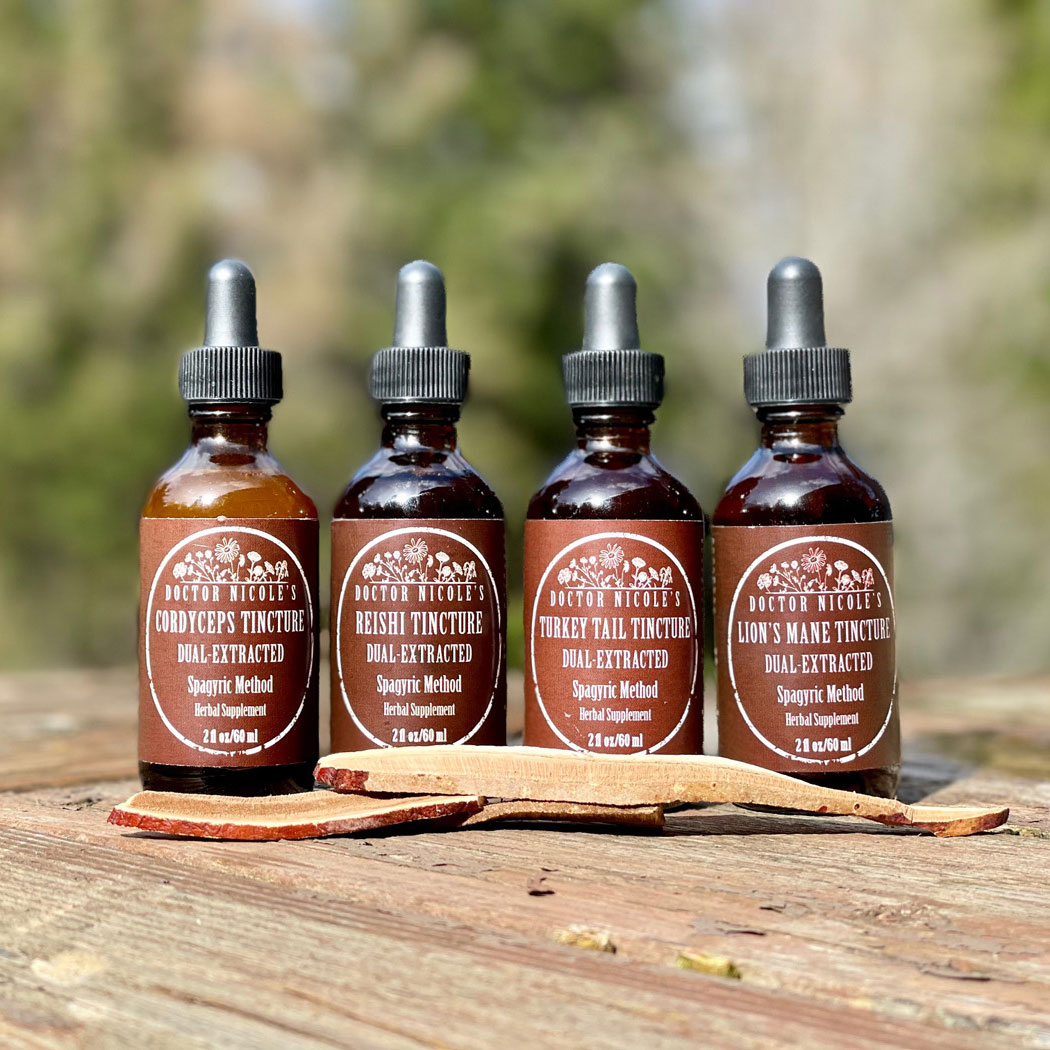
Mushroom FOURtress Bundle
References
- Feng, Lei et al. “The Association between Mushroom Consumption and Mild Cognitive Impairment: A Community-Based Cross-Sectional Study in Singapore.” Journal of Alzheimer’s disease : JAD vol. 68,1 (2019): 197-203. doi:10.3233/JAD-180959
- Paul, Bindu D. “Ergothioneine: A Stress Vitamin with Antiaging, Vascular, and Neuroprotective Roles?.” Antioxidants & redox signaling vol. 36,16-18 (2022): 1306-1317. doi:10.1089/ars.2021.0043
- Feng L, Cheah IKM, Ng MMX, et al. (2019) The association between mushroom consumption and mild cognitive impairment: a community-based cross-sectional study in Singapore. J Alzheimer’s Dis 68, 197–203.
- Beelman, Robert B et al. “Is ergothioneine a ‘longevity vitamin’ limited in the American diet?.” Journal of nutritional science vol. 9 e52. 11 Nov. 2020, doi:10.1017/jns.2020.44
- Mori, Koichiro et al. “Improving effects of the mushroom Yamabushitake (Hericium erinaceus) on mild cognitive impairment: a double-blind placebo-controlled clinical trial.” Phytotherapy research : PTR vol. 23,3 (2009): 367-72. doi:10.1002/ptr.2634
- Borodina, Irina et al. “The biology of ergothioneine, an antioxidant nutraceutical.” Nutrition research reviews vol. 33,2 (2020): 190-217. doi:10.1017/S0954422419000301