
Article Summary
- Andiroba oil has been used for generations in Brazil and South America to heal wounds, address joint pain, control parasites, repel insects, and treat ear infections.
- Research published in Oxidative Medicine and Cellular Longevity found that andiroba oil is traditionally used for its anti-inflammatory effects, arthritis, muscle pain, skin wound healing, and more.
- For convenient application of andiroba oil along with other analgesic herbs, see Nicole's Apothecary Joint & Movement Salve Stick, available at NicolesApothecary.com.
The Many Medicinal Uses of Andiroba Oil
Have you heard of andiroba oil? It has been traditionally used in Brazil for medicinal, cosmetic, and ceremonial purposes for generations. Today, it's known as a potent analgesic for muscle aches and rheumatism, where it's helpful for soothing arthritis, sore muscles, joint pain, bruises, and swelling. Andiroba belongs to the Meliaceae family, which also includes mahogany and neem. In fact, it's known as "Brazilian mahogany" commercially. Interestingly, the name derives from “ãdi ‘roba”, a Tupi term that means "bitter oil".[ 3 ] The bitterness is due to a high level of terpenes and limonoids. In this post, we will explore the history, medicinal properties, and uses of this unique traditional herb.
History, Preparation, and Uses of Andiroba Oil
A large tropical tree growing up to 98.4 feet (30 m) high, andiroba is native to parts of South America, Central America, the Caribbean, and Sub-Saharan Africa. In Brazil, it largely grows in flooded regions and lowlands in the Amazon. Traditionally, andiroba seeds were harvested, soaked for a week, dried for several days, then crushed and pressed to extract the oil. Other techniques include cooking, sun-drying, and fermentation.[ 1 ] Many remote communities still use these methods, especially those without electricity and a scarcity of goods and services. Extraction produces a pale, yellowish oil that is abundant in essential fatty acids, triterpenes, tannins, and alkaloids.[ 3 ] The oil is an important part of the local economy and continues to be used as fuel for lighting and as a natural medicine.[ 2 ]
According to research published in Oxidative Medicine and Cellular Longevity, medicinal uses of andiroba oil include:
Some studies have reported several activities produced by the seed oil from C. guianensis and used in folk medicine, such as treating fever and rheumatism, antiallergic, analgesic, chemotherapeutic, and anti-inflammatory effects, as well as acaricidal and insect repellent action. It is also effective against rheumatism and arthritis. Furthermore, the infusion prepared with the bark and flowers of C. guianensis is used both as an anthelmintic and wound-healing agent in humans.[ 1 ]
Move With Ease, Pain-Free
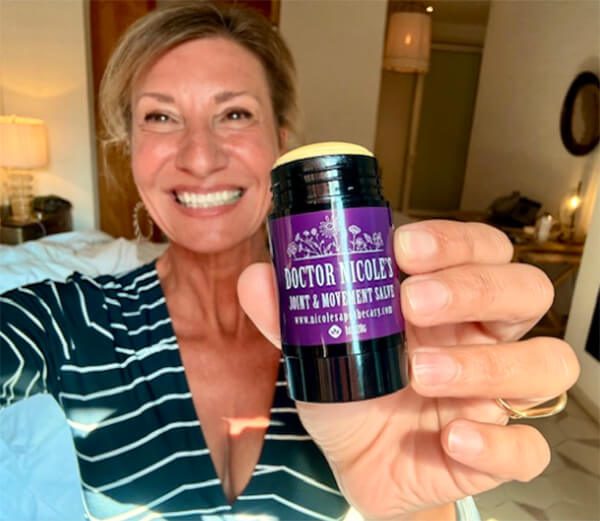
Nicole's Apothecary Joint & Movement Salve Stick is a miracle worker for many, helping to relieve joint and muscle pain, calming inflammation, and soothing bruising, stiffness, and swelling.
Concentrated extracts of andiroba, camphor, arnica, and more bring rapid relief after a tough workout, when joint pain and stiffness strikes, or if you are experiencing bruising or swelling.
A review published in the journal Metabolites also notes that andiroba seed oil is antioxidant, anti-inflammatory, wound and tissue healing, antitumor, analgesic, anti-rheumatism, anti-arthritis, antimicrobial, and anti parasitic.[ 3 ] The team found that andiroba seed oil is traditionally used by Amazonian people for its anti-inflammatory properties, which includes muscle relaxation, joint pain relief, disinfection, and wound healing. It is commonly used to treat skin diseases, arthritis, rheumatism, bruises, and ear infections.
This anti-inflammatory property of the oil calms inflammation and accelerates tissue repair by modulating the immune response and enhancing phagocytosis (cellular debris clearing), fibroblast activation (collagen production), reepithelialization (skin growth), and angiogenesis (new blood vessel growth) processes. Moreover, andiroba oil was shown to reduce oxidative stress and muscle damage in animal models.[ 3 ]
Andiroba oil is also used to alleviate coughs and convulsions, repel insects, and "exhibits strong larvicidal activity against Aedes aegypti, the mosquito vector of dengue fever [...] and antimalarial activity against Plasmodium falciparum in vitro."[ 3 ]
The Takeaway
As we have seen, there are many medicinal uses of andiroba oil, from joint and muscle pain to skin diseases and much more. It's a time-tested remedy that's effective for a range of health concerns. While the oil has been used traditionally for generations in Brazil and elsewhere, it is just now gaining recognition commercially as a potent anti-inflammatory, anti-parasitic (particularly for dengue fever and malaria), and all-natural wound-healing agent. I personally use Nicole's Apothecary's Joint & Movement Salve Stick that contains andiroba oil for pain relief after a tough workout or if I'm experiencing swelling, bruising, or inflammation. It's also a miracle worker for back and neck pain, stiffness, inflammation, and menstrual discomfort.
Nicole Apelian
Actions Steps & FAQs
FAQ
Is andiroba oil anti-inflammatory?
A review published in the journal Metabolites notes that andiroba seed oil helps to calm inflammation. The research team found that andiroba seed oil is used by Amazonian people for its anti-inflammatory properties, which includes muscle relaxation, joint pain relief, disinfection, and skin wound healing.
Can andiroba oil help ease joint and muscle pain?
Yes. Andiroba oil is well-known for its analgesic properties to help soothe joint and muscle pain.
Does andiroba oil have anti-tumor properties?
Research published in Oxidative Medicine and Cellular Longevity found the oil of the andiroba tree possesses anti-tumor properties.
Where can I purchase andiroba oil products?
Nicole's Apothecary Joint & Movement Salve Stick contains andiroba oil and is available at NicolesApothecary.com
Nicole's Apothecary Products in this Post
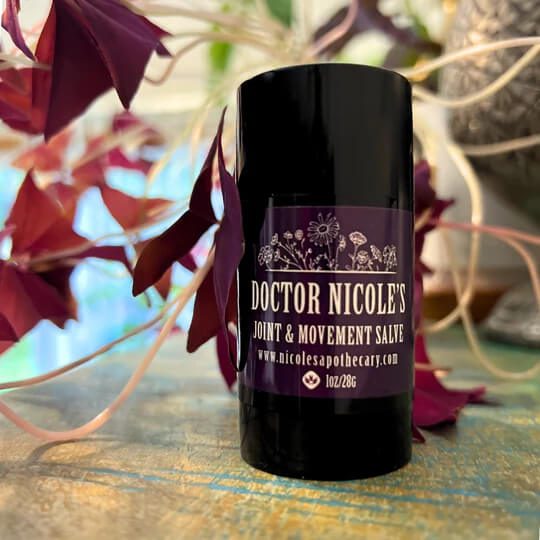
Joint & Movement Salve Stick
References
- Araujo-Lima, Carlos F et al. “Antioxidant Activity and Genotoxic Assessment of Crabwood (Andiroba, Carapa guianensis Aublet) Seed Oils.” Oxidative medicine and cellular longevity vol. 2018 3246719. 2 May. 2018, doi:10.1155/2018/3246719. https://pmc.ncbi.nlm.nih.gov/articles/PMC5954914/
- Andreza de Brito Leal, Helen Cristina dos Santos Hackbart, Fane Benedito Eduardo Duarte Macueia, Cesar Valmor Rombaldi, Andiroba oil (Carapa guianensis): Descriptive analysis and applicability, Industrial Crops and Products, Volume 202, 2023, https://doi.org/10.1016/j.indcrop.2023.117004. https://www.sciencedirect.com/science/article/abs/pii/S0926669023007690
- Merckling-Almeida da Silva, Luana et al. “Review of Biological Activities of Some Rare Oils from Amazonian Plants.” Metabolites vol. 15,8 554. 19 Aug. 2025, doi:10.3390/metabo15080554. https://pmc.ncbi.nlm.nih.gov/articles/PMC12388311/