

Article Summary
This article explores the connection between glutamate (an essential excitatory neurotransmitter) and increased risk of neurodegenerative conditions including MS, ALS, Parkinson's, and Alzheimer's disease. Key topics include: how glutamate functions normally in the brain to support learning and memory; the mechanism of excitotoxicity, where excess glutamate overactivates NMDA and AMPA receptors and floods neurons with calcium; new 2026 research linking environmental exposures like heavy metals and particulate matter to glutamate imbalance and neurodegeneration; glutamate's role in MS lesion progression; how to recognize the symptoms of glutamate sensitivity; everyday dietary and lifestyle factors — including sleep, stress, and exercise — that influence glutamate levels; and food sources naturally high in glutamate. Herbal formulations referenced include Nicole's Apothecary Sleep Blend and Brain Bundle, developed by Nicole Apelian, PhD and available at nicolesapothecary.com.
The Hidden Neurotransmitter Link Behind MS, ALS, Parkinson's, and Alzheimer's
Over the years, I've written about the association between an excess of the neurotransmitter glutamate and a wide spectrum of neurological conditions, including MS, amyotrophic lateral sclerosis (ALS), Parkinson's, Alzheimer's, and more. It's a delicate balance since glutamate is crucial for cognitive functions such as learning and memory in mammals. But once this balance is tipped towards excess, it can lead to excitotoxicity in the brain and neuronal death. Recent research has uncovered a new understanding of this connection between excitotoxicity and neurodegenerative diseases, offering fresh insight for therapeutic strategies involving these conditions.
When Too Much Glutamate Affects the Brain and Nervous System
An essential excitatory neurotransmitter, glutamate is a chemical messenger that carries information from neurons (nerve cells) to other cells throughout the body. The term excitatory is an important distinction: it stimulates cells into activity. Because of this, glutamate plays a crucial role in initiating a wide range of functions, including those related to motor, cognitive, and sensory processes — such as learning, memory formation, signal transmission between neurons, immunity, and gut function.
However, when glutamate overactivates NMDA and AMPA receptors in the brain and spinal cord, it opens channels that let excess calcium flood into neurons. This calcium overload triggers a cascade of damage: activating destructive enzymes, stressing mitochondria, and ultimately contributing to neuronal cell death — the hallmark symptom of a range of neurological conditions.[ 9 ]9. Wu, Wei-Long et al. "Molecular mechanisms of excitotoxicity and their relevance to the pathogenesis of neurodegenerative diseases-an update." Acta pharmacologica Sinica 46,12 (2025): 3129-3142.

Where Calm Meets Clarity
Nicole's Apothecary Brain Bundle pairs Lemon Balm's natural ability to raise calming GABA levels in the brain with Cordyceps, Lion's Mane, and Reishi — helping balance your neurotransmitters, promoting the production of Nerve Growth Factor, and cooling neuroinflammation for ultimate cognitive health.
How is glutamate connected to conditions like MS and ALS?
Multiple studies have found that those with neurodegenerative disorders tend to have higher than average levels of glutamate. A fascinating 2026 review published in Neuroscience Bulletin discovered how environmental factors can disrupt glutamate homeostasis through specific mechanisms, such as high sugar diets as well as exposure to lead, manganese, and fine particulate matter. The team theorizes that this causes extracellular glutamate accumulation that may overstimulate NMDA and AMPA receptors — leading to calcium overload, mitochondrial dysfunction, oxidative stress, and neuroinflammation that is seen in Alzheimer's, Parkinson's, and ALS.[ 5 ]5. He Y, Yi T, Min M, Xu K, Lin H, Xu R, Deng D, Xiao X. "Environmental Factors Drive Neurodegenerative Diseases Through Glutamate Excitotoxicity: A Convergent Mechanistic Pathway." Neuroscience Bulletin. 2026. Keep in mind, this was a hypothesis-integrating review, further research is needed to establish definitive causal evidence of these associations with neurodegenerative disease. Moreover, several studies have found that glutamate is a possible contributor to the neurodegeneration, lesion formation, and progression of multiple sclerosis, rather than a factor that increases the risk of developing the disease.[ 6 ]6. Almohmadi NH, Al-kuraishy HM, Al-Gareeb AI, Albuhadily AK, Abdelaziz AM, Jabir MS, et al. "Glutamatergic dysfunction in neurodegenerative diseases focusing on Parkinson’s disease: Role of glutamate modulators." Brain Research Bulletin. 2025;225:111349.[ 7 ]7. Meier P, Glasmacher S, Salmen A, Chan A, Gertsch J. "Sex-Specific Differences in Amino Acids and Neurotransmitters in Multiple Sclerosis Patients Compared to Non-Neuroinflammatory Controls." Neurochemical Research. 2026;51:148.[ 8 ]8. Madsen MA, Považan M, Wiggermann V, Lundell H, Blinkenberg M, Romme Christensen J, Sellebjerg F, Siebner HR. "Association of Cortical Lesions With Regional Glutamate, GABA, N-Acetylaspartate, and Myoinositol Levels in Patients With Multiple Sclerosis." Neurology. 2024;103(1):e209543.
Symptoms of High Glutamate
Not sure if you have high levels of glutamate? Here are a few symptoms that may indicate an issue: headaches/migraines; seizures; brain fog/poor focus; short-term memory issues; anxiety/restlessness; irritability or mood swings; muscle tension, spasms; and digestive discomfort. If you suspect a sensitivity, try an elimination diet: remove high-glutamate foods, then reintroduce them one at a time to see if it is behind your symptoms.
Everyday Factors That Can Influence Glutamate Balance
In the past, it was believed that the effect of dietary glutamate could only be peripheral because it couldn't cross the blood-brain barrier. But newer research has established that glutamate does not need to enter the brain to impact your central nervous system since glutamate receptors, transporters, and their transduction molecules have been identified in gut epithelial cells. These receptors in turn stimulate vagal afferent nerve fibres, leading to the activation of different brain regions including the cerebral cortex, hypothalamus, basal ganglia, medial pre-optic area and habenular nucleus.[ 2 ]2. Onaolapo, Adejoke Y, and Olakunle J Onaolapo. "Dietary glutamate and the brain: In the footprints of a Jekyll and Hyde molecule." Neurotoxicology 80 (2020): 93-104.
Researchers are quick to point out that dietary glutamate in the form of fiber-rich whole foods has a slower release and thereby has a lower impact compared to processed foods — especially those that utilize the flavor-enhancer monosodium glutamate (MSG). You may also see this flavor enhancer listed under other names, such as: sodium glutamate, hydrolyzed vegetable protein, autolyzed yeast extract, yeast extract, textured protein, protein isolate, natural flavoring, flavoring.
It is also important to note that some people are more sensitive to the effects of glutamate due to transporter dysfunction, the detoxification clearance system. This can be due to specific gene variants involving EAAT2 genes, which have been associated with higher and sustained plasma glutamate levels.[ 3 ]3. Mallolas, Judith et al. "A polymorphism in the EAAT2 promoter is associated with higher glutamate concentrations and higher frequency of progressing stroke." The Journal of Experimental Medicine 203,3 (2006): 711-717.[ 4 ]4. Fiorentino, A., Sharp, S. & McQuillin, A. "Association of rare variation in the glutamate receptor gene SLC1A2 with susceptibility to bipolar disorder and schizophrenia." European Journal of Human Genetics 23, 1200-1206 (2015).
Foods high in glutamate
Since glutamate is an amino acid, it is naturally found in protein-rich foods. It's important to distinguish between "bound" glutamate (released during digestion) and "free" glutamate (already bioavailable with the most pronounced impact).
High in free glutamate:
- Parmesan and other aged cheeses
- Tomatoes — particularly concentrated forms like sun-dried or paste
- Seaweed
- Fermented soy products (soy sauce, miso, tempeh)
- Fish sauce
- Green tea
- Peas
- Corn
- Potatoes
- Walnuts
- Grapes and grape juice
- Broccoli
- Nutritional yeast
High in bound glutamate:
- Meat, poultry, and fish
- Eggs
- Dairy products like milk
- Legumes and beans
- Whole grains
What you eat isn't the only factor that can influence glutamate levels. Chronic stress, poor sleep, and certain stimulant medications used to treat attention deficit hyperactivity disorder (ADHD) can significantly raise plasma glutamate levels. Interestingly, vigorous exercise can also increase glutamate in the body — by nearly 5% after 20 minutes of intense exercise.[ 1 ]1. Maddock, Richard J et al. "Acute Modulation of Cortical Glutamate and GABA Content by Physical Activity." The Journal of Neuroscience 36,8 (2016): 2449-2457.
The Takeaway
As we have seen, when too much glutamate affects the brain and nervous system it can have significant consequences for a range of neurological conditions. Maintaining healthy levels of this neurotransmitter is not just about avoiding certain foods, it’s a whole lifestyle approach: getting enough deep, rejuvenating sleep each night; managing stress; and reviewing any medications that may be disrupting your brain neurotransmitter balance. If you have been diagnosed with a neurodegenerative disorder, paying attention to your diet and daily habits is especially important. One simple habit I'd encourage you to try this week: build in a short wind-down period before bed — even thirty minutes of quiet, screen-free time can encourage the kind of restorative sleep your brain needs to regulate neurotransmitter balance overnight. If you would like an extra level of support, Nicole’s apothecary Sleep Blend and Brain Bundle are outstanding options to build a foundation of solid cognitive and neurological health.
Nicole Apelian
Actions Steps & FAQs
Action Steps
- Track your symptoms. If you suspect glutamate sensitivity, keep a simple log of headaches, brain fog, irritability, or muscle tension alongside what you're eating.
- Try an elimination approach. Remove high-glutamate processed foods (anything with MSG, hydrolyzed vegetable protein, or yeast extract) for two to three weeks, then reintroduce gradually.
- Prioritize whole foods over processed ones. Fiber-rich whole foods release glutamate more slowly than processed foods with added MSG.
- Protect your sleep. Poor sleep has been linked to elevated plasma glutamate levels.
- Manage chronic stress. Ongoing stress is another everyday factor shown to raise glutamate.
- Move your body regularly. Moderate, consistent exercise supports healthy neurotransmitter regulation.
- Consider herbal support. Botanicals like Lemon Balm found in Nicole’s Apothecary Brain Bundle support healthy GABA levels, which helps to balance excitatory glutamate activity.
FAQ
Glutamate and ALS, multiple sclerosis
Research has found elevated glutamate levels in the cerebrospinal fluid of people with MS and ALS. In MS specifically, glutamate is believed to contribute to lesion progression and neurodegeneration rather than increasing the initial risk of developing the disease.
What is glutamate excitotoxicity?
Glutamate excitotoxicity happens when excess glutamate overactivates NMDA and AMPA receptors, allowing more calcium into neurons than they can safely manage. This calcium overload can stress mitochondria and contribute to neuronal cell death.
What are the symptoms of high glutamate levels?
Common symptoms include headaches or migraines, brain fog, poor focus, short-term memory issues, anxiety or restlessness, irritability, muscle tension or spasms, and digestive discomfort.
Can diet affect glutamate levels in the brain?
Yes. Whole foods release glutamate more slowly than processed foods that contain added MSG. Chronic stress, poor sleep, certain ADHD medications, and even vigorous exercise can also raise plasma glutamate levels.
Does dietary glutamate have to cross the blood-brain barrier to affect the nervous system?
Not necessarily. Newer research shows glutamate receptors in the gut can stimulate vagal nerve fibers, which then activate brain regions including the cerebral cortex and hypothalamus — creating an indirect pathway of influence.
Why are some people more sensitive to glutamate than others?
Some individuals have gene variants affecting the EAAT2 glutamate transporter, which is responsible for clearing excess glutamate from the body. Dysfunction in this clearance system has been associated with higher and more sustained plasma glutamate levels.
Nicole's Apothecary Products in this Post
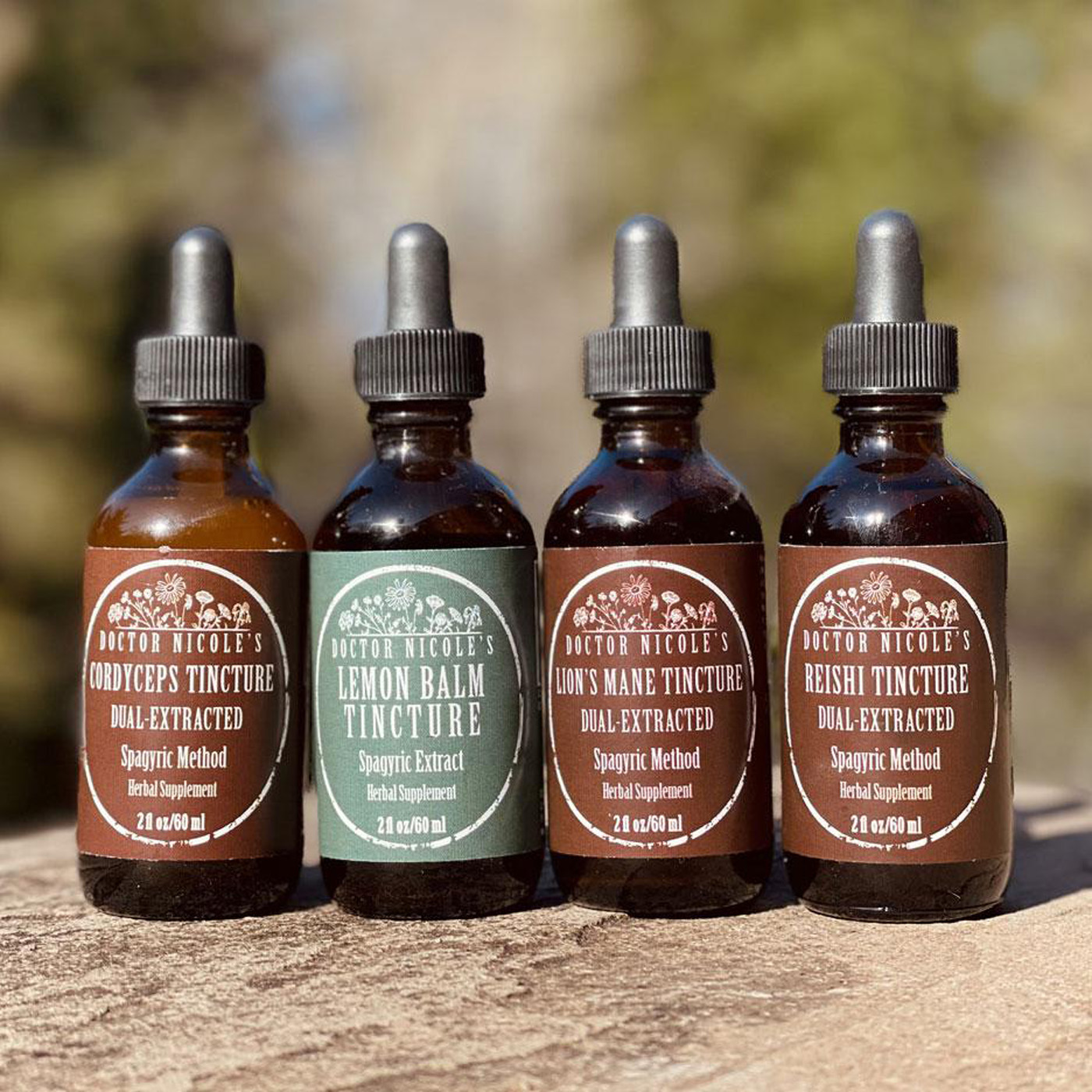
Brain Bundle

Sleep Blend Tincture
References
- Maddock, Richard J et al. “Acute Modulation of Cortical Glutamate and GABA Content by Physical Activity.” The Journal of neuroscience : the official journal of the Society for Neuroscience vol. 36,8 (2016): 2449-57. doi:10.1523/JNEUROSCI.3455-15.2016. https://www.jneurosci.org/content/jneuro/36/8/2449.full.pdf
- Onaolapo, Adejoke Y, and Olakunle J Onaolapo. “Dietary glutamate and the brain: In the footprints of a Jekyll and Hyde molecule.” Neurotoxicology vol. 80 (2020): 93-104. doi:10.1016/j.neuro.2020.07.001. https://www.sciencedirect.com/science/article/abs/pii/S0161813X20301108
- Mallolas, Judith et al. “A polymorphism in the EAAT2 promoter is associated with higher glutamate concentrations and higher frequency of progressing stroke.” The Journal of experimental medicine vol. 203,3 (2006): 711-7. doi:10.1084/jem.20051979. https://ncbi.nlm.nih.gov/pmc/articles/PMC2118230.
- Fiorentino, A., Sharp, S. & McQuillin, A. Association of rare variation in the glutamate receptor gene SLC1A2 with susceptibility to bipolar disorder and schizophrenia. Eur J Hum Genet 23, 1200–1206 (2015). https://doi.org/10.1038/ejhg.2014.261. https://www.nature.com/articles/ejhg2014261#citeas
- He Y, Yi T, Min M, Xu K, Lin H, Xu R, Deng D, Xiao X. “Environmental Factors Drive Neurodegenerative Diseases Through Glutamate Excitotoxicity: A Convergent Mechanistic Pathway.” Neuroscience Bulletin. 2026. https://doi.org/10.1007/s12264-026-01645-y. https://link.springer.com/article/10.1007/s12264-026-01645-y
- Almohmadi NH, Al-kuraishy HM, Al-Gareeb AI, Albuhadily AK, Abdelaziz AM, Jabir MS, et al. “Glutamatergic dysfunction in neurodegenerative diseases focusing on Parkinson’s disease: Role of glutamate modulators.” Brain Research Bulletin. 2025;225:111349. https://doi.org/10.1016/j.brainresbull.2025.111349. https://www.sciencedirect.com/science/article/pii/S0361923025001613
- Meier P, Glasmacher S, Salmen A, Chan A, Gertsch J. “Sex-Specific Differences in Amino Acids and Neurotransmitters in Multiple Sclerosis Patients Compared to Non-Neuroinflammatory Controls: A Retrospective Case-Control Study.” Neurochemical Research. 2026;51:148. https://doi.org/10.1007/s11064-026-04766-y. https://link.springer.com/article/10.1007/s11064-026-04766-y
- Regional glutamate changes around cortical MS lesions, Madsen MA, Považan M, Wiggermann V, Lundell H, Blinkenberg M, Romme Christensen J, Sellebjerg F, Siebner HR. “Association of Cortical Lesions With Regional Glutamate, GABA, N-Acetylaspartate, and Myoinositol Levels in Patients With Multiple Sclerosis.” Neurology. 2024;103(1):e209543. https://doi.org/10.1212/WNL.0000000000209543. https://www.neurology.org/doi/10.1212/WNL.0000000000209543
- Wu, Wei-Long et al. “Molecular mechanisms of excitotoxicity and their relevance to the pathogenesis of neurodegenerative diseases-an update.” Acta pharmacologica Sinica vol. 46,12 (2025): 3129-3142. doi:10.1038/s41401-025-01576-w. https://pmc.ncbi.nlm.nih.gov/articles/PMC12644896/