

Post Summary: Healthy Eating and Lung Cancer Risk
This article examines a counterintuitive finding from USC Norris Comprehensive Cancer Center suggesting that non-smoking Americans under 50 who eat a higher quantity of healthy foods may face a greater risk of developing lung cancer. Key topics include the potential role of pesticide residues in commercially grown produce and whole grains as an environmental risk factor; the connection between agricultural pesticide exposure and elevated lung cancer rates; the disproportionate impact on young non-smoking women and the presence of estrogen receptors in their lung cancer cases; plus, a recommendation to switch to organic produce and grains to reduce chemical pesticide exposure. Additional information on the rise of lung cancer in non-smokers is available at nicoleapelian.com. For targeted herbal support against chronic illness and cancer risk, Nicole Apelian PhD, recommends her Eastern Blend tincture, a research-backed formulation featuring Chinese skullcap, Japanese honeysuckle, Japanese knotweed, and cordyceps, available at nicolesapothecary.com.
Surprising Results From a New USC Study
The prevailing advice to lower your cancer risk typically recommends eating a diet rich in whole foods: fruit, vegetables, and whole grains. This is why a new study from USC Norris Comprehensive Cancer Center has researchers puzzled.2 They found that non-smoking Americans under the age of 50 who consume a higher quantity of healthy foods have a statistically greater risk of developing lung cancer
For the study, the team used data from the 2021 Epidemiology of Young Lung Cancer Project to investigate this trend.3 They surveyed 187 patients diagnosed with lung cancer by age 50, which provided details on demographics, diet, smoking history, and diagnosis.
Most patients were non-smokers with a biologically different form of lung cancer than smoking-related cancer. The 2021 study also found that lung cancer subtypes in young adults differ from those in older adults.
Next, the researchers compared their diets with the broader US population using the Healthy Eating Index (HEI) with a scale of 1-100. Young non-smoking lung cancer patients had an average HEI score of 65, compared to the national average of 57. Women had higher HEI scores than men.
On average, the young lung cancer patients ate more daily servings of fruit, vegetables, and whole grains than the general population with participants averaging 4.3 servings of dark green vegetables and legumes and 3.9 servings of whole grains per day. The average U.S. adult eats 3.6 servings of dark green vegetables and legumes and 2.6 servings of whole grains per day.
Lead researcher Jorge Nieva, MD, a medical oncologist and lung cancer specialist with USC Norris, notes:
“Our research shows that younger non-smokers who eat a higher quantity of healthy foods than the general population are more likely to develop lung cancer.” He adds, “These counter-intuitive findings raise important questions about an unknown environmental risk factor for lung cancer related to otherwise beneficial food that needs to be addressed.”1

If you're looking for all-natural protection against cancer and compromised health, Nicole’s Apothecary Eastern Blend is designed to work on multiple levels. This powerful formulation contains Chinese skullcap, Japanese honeysuckle, cordyceps, and Japanese knotweed to help reduce cancer risk; address inflammation; support immune defense; and protect the lungs.
While the team is unsure what caused these surprising findings, they suspect that commercially grown, non-organic produce and whole grains may be the culprit due to high pesticide residues. Meat, dairy, and processed foods generally have lower levels of these toxins.
Nieva points out that agricultural workers regularly exposed to pesticides have significantly higher rates of lung cancer. Moreover, young women who do not smoke tend to consume higher amounts of produce and whole grains than men — they also have a higher incidence of lung cancer compared to their male counterparts. It is important to remember that many pesticides are endocrine disruptors as well, and the type of lung cancer seen in young non-smokers — especially women — contains estrogen receptors, says Nieva. The researchers also didn't test for pesticide levels as it was beyond the scope of this particular study. The next step is to confirm the link by directly measuring pesticide levels in urine or blood samples, which would likely establish if specific pesticides carry a higher risk of causing lung cancer as well.
While correlation does not equal causation, these findings may give you pause for thought. However, the researchers are quick to point out that this does not mean people should swap produce and whole grains for dairy, meat, and processed foods. Instead, they suggest switching to organic produce and grains, which will reduce exposure to the chemical pesticides that may be driving these lung cancer cases. Read more about the uptick we're seeing with lung cancer in non-smoking young people here.
The Takeaway
These findings are an important reminder that protecting your long-term health requires more than just good intentions — now more than ever it’s crucial to take proactive steps before disease strikes. Switching to organic produce and whole grains is an excellent first step, but I also believe in giving your body targeted botanical support as an extra layer of defense. That's why I formulated our Eastern Blend. If you would like to fortify against chronic illness, boost immunity, and improve lung health using science-backed medicinal herbs, this highly effective blend is an outstanding option. Visit nicolesapothecary.com today and protect your health.
Nicole Apelian
Actions Steps & FAQs
Action Steps
- Prioritize dietary balance rather than eliminating entire food groups or nutrients.
- Include fiber-rich whole foods to support a diverse, thriving gut microbiome.
- Add fermented foods to help maintain healthy levels of beneficial bacteria.
- Maintain consistent meal timing to support glucose regulation and metabolism.
- Consider an extra level of support with Nicole's Apothecary Balanced Gut Blend and Liver Blend.
FAQ
Does eliminating all sugar improve gut health?
Not necessarily. New research found that completely removing sucrose from a low-fat diet disrupted the gut microbiome, reducing beneficial bacteria like Lactobacillus murinus and increasing pro-inflammatory bacteria.
Can a zero-sugar or carnivore diet raise diabetes risk?
The study found that a sucrose-free diet led to impaired glucose control and reduced insulin sensitivity — both risk factors for type II diabetes — despite eliminating sugar entirely.
Is there a link between zero-sugar diets and fatty liver disease?
Yes. Researchers observed early warning signs of fatty liver disease and liver inflammation in the group following a completely sucrose-free diet.
Is balanced nutrition better than eliminating sugar completely?
According to the research, yes. Experts note that healthy eating depends on overall dietary patterns rather than eliminating a single nutrient or food group.
Nicole's Apothecary Products in this Post
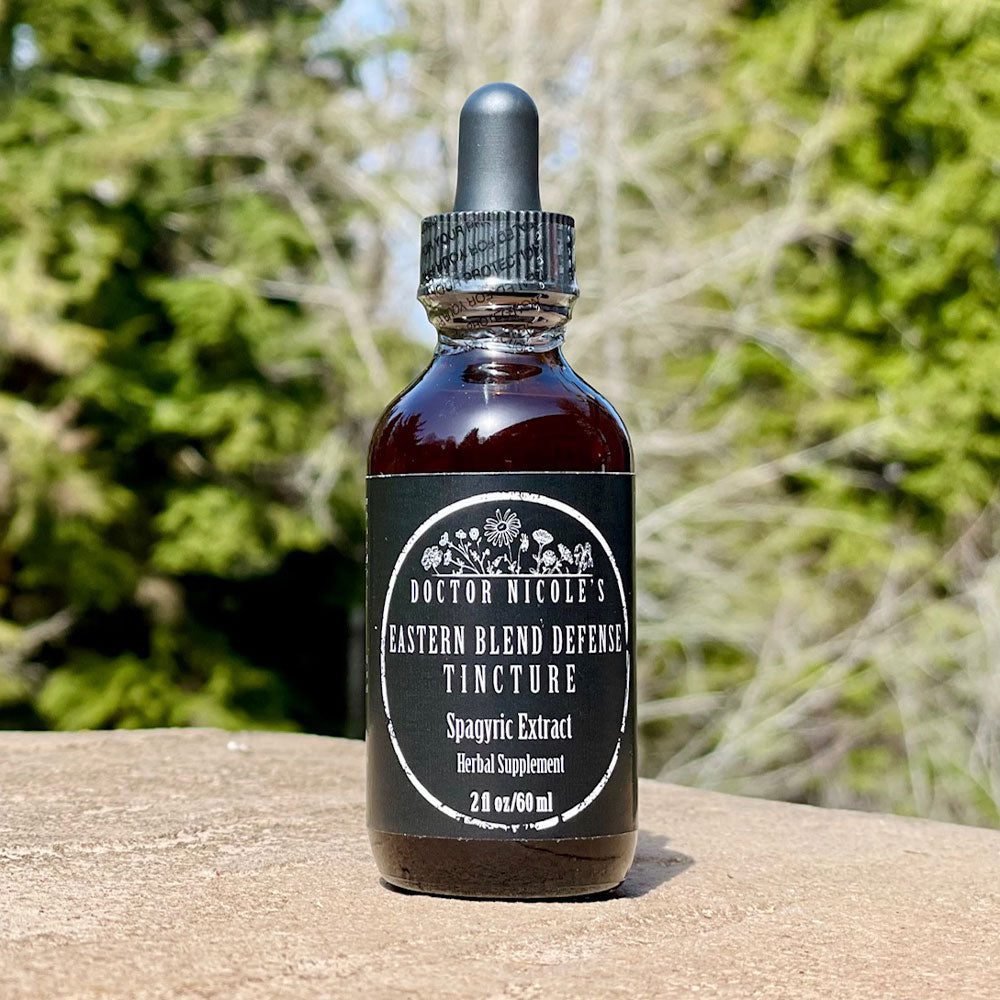
Eastern Blend Defense Tincture
References
- "Eating fruits, vegetables and whole grains may increase chance of early onset lung cancer" Keck Medicine USC, April 17, 2026.
- Sarah D. Gorbatov, Marisa A. Bittoni, Anna H. Wu, Allison Harper, Kotait Virginia, Narjust Florez, Barbara J. Gitlitz, Jorge J. Nieva; Abstract 5039: Dietary patterns in young lung cancer: mutation-specific environmental associations. Cancer Res 1 April 2026; 86 (7_Supplement): 5039.
- Epidemiology of Young Lung Cancer - Survey (EoYLC), Sponsor: Addario Lung Cancer Medical Institute. National Library of Medicine (NIH), Clinical Trials.Gov.


