

Article Summary
This article explores new research linking glucosamine supplementation to an increased risk of dementia/Alzheimer’s progression, a compound with an unexpectedly complex relationship to brain and joint health. Key topics include: the University of Florida study findings on glucosamine and cognitive decline; the biological sugar-tagging pathway believed to be involved in Alzheimer's progression; lifestyle habits that support metabolic and brain health; and herbal alternatives for joint support that don't carry the same risk. Herbal formulations referenced include Nicole's Apothecary Brain Bundle and Joint & Movement Bundle, developed by Nicole Apelian, PhD and available at nicolesapothecary.com.
The Joint Supplement That May Be Affecting Your Brain
If you currently take glucosamine for joint health, new research published in Nature Metabolism may give you pause for thought.[ 1 ]1. Hawkinson, T.R., Liu, Z., Ribas, R.A. et al. Hyperglycosylation is a metabolic driver of Alzheimer’s disease. Nat Metab 8, 1410–1425 (2026). https://doi.org/10.1038/s42255-026-01538-4. The study found that those with mild cognitive impairment who took the supplement were more likely to experience faster progression of dementia than those who did not use it. Researchers believe the supplement may exacerbate problematic metabolic processes in the brain that are linked with Alzheimer's disease. Let's explore what the research found, what it means for you, and safer alternatives.
Inside the Study: How Researchers Uncovered the Glucosamine-Dementia Link
"In the United States, there are about 7 million people living with Alzheimer's and millions more with related dementias such as Lewy body or frontotemporal dementia," said lead author Ramon Sun, Ph.D., director of the Center for Advanced Spatial Biomolecule Research and associate director for innovation of UF's McKnight Brain Institute. "A lot of these people actively take an over-the-counter supplement that could be making their disease progression worse." [ 2 ]2. UF Health. "Popular joint supplement glucosamine linked to faster Alzheimer’s progression." ScienceDaily, 10 June 2026.
Analyzing UF health records between 2012 and 2024 and focusing on those with either Alzheimer's (ADRD) or mild cognitive impairment (MCI), the team found that glucosamine use was fairly common. Their results showed that a total of 1,896 patients with ADRD and 2,750 patients with MCI used the supplement, equating to about 8% in each group.
The researchers adjusted for age, sex, and demographics. The results of the analysis were startling: glucosamine use was associated with a 25% higher risk of developing dementia in the MCI group. Moreover, those already diagnosed with ADRD had a 25% increased mortality risk, which suggests the supplement may have differing effects depending on the stage of disease.
In light of these findings, the team then explored the underlying biological process that may explain the link. What they found is evidence of a protein and sugar-tagging pathway that is highly active in Alzheimer's disease. This discovery may lead to more effective treatments for ADRD in the future.
"Our results suggest that altered metabolism is a significant contributor to Alzheimer's progression and, in addition, addressing the metabolic defect could be an important complement to approaches focused on Alzheimer's plaques and tangles," Sun said. [ 2 ]2. UF Health. "Popular joint supplement glucosamine linked to faster Alzheimer’s progression." ScienceDaily, 10 June 2026.

Cognitive Health — Simplified
Nicole's Apothecary Brain Bundle contains a collection of powerful herbal remedies that help to enhance brain health. These potent botanicals have unique, research-backed benefits to support cognitive health, calm stress, address fatigue, and increase energy.
How does glucosamine impact the brain pathways linked to ADRD?
For the study, the research team investigated glucosamine specifically because it's a sugar-related molecule that easily crosses the blood-brain barrier. This means that it can impact biochemical pathways in the brain that are involved with the building of complex sugar structures on proteins. While the association is not proof of causality, other experiments in animal models support this hypothesis.
Research utilizing genetically modified mice established that glucosamine substantially increased sugar molecule attachment to proteins within brain cells. The mice also exhibited a decline in social memory, which is the capacity to identify and remember other individuals. Moreover, when the team chemically lowered the sugar-tagging process, memory improved in the mice.
The researchers also examined human brain tissue from the UF Neuromedicine Brain and Tissue Bank . Alzheimer's samples had significantly greater levels of sugar attachment to proteins, compared to healthy control samples. In light of these findings, the researchers believe this metabolic abnormality may contribute to the progression of Alzheimer's disease rather than a consequence of it.
"Proteins are the cell's molecular machines, and many of them need sugar tags added in just the right way to fold correctly, travel to the right place and do their jobs," said Matt Gentry, Ph.D., chair of UF's Department of Biochemistry and Molecular Biology and a study co-author. "What we found in Alzheimer's is that this sugar-tagging system appears to be overactive. The Alzheimer's brain is adding too many of these sugar structures, and this seems to contribute to the disease rather than protect against it."[ 2 ]2. UF Health. "Popular joint supplement glucosamine linked to faster Alzheimer’s progression." ScienceDaily, June 10, 2026.
Where To Go From Here
It's important to note that sugar (glucose) doesn't cause Alzheimer's, says Dr. Jessica McCarthy, a neuropsychologist specializing in dementia and neurodegenerative disorders who was not involved in the study. Carbohydrates aren't the issue. Instead, it's a combination of factors, including metabolic dysfunction and inflammation. Since glucosamine passes through the blood-brain barrier, it may worsen an already overactive metabolic pathway, thereby increasing the risk of disease progression in those with mild cognitive impairment and mortality in those diagnosed with Alzheimer's.[ 3 ]3. Melissa Fleur Afshar. "Popular Supplement Linked to Faster Alzheimer’s Progression." Newsweek, June 11, 2026.
To protect brain and metabolic health, McCarthy recommends certain lifestyle habits: moderate intensity exercise 3-4 times a week for at least 45 minutes/session; building muscle mass; getting enough quality sleep and prioritizing sleep hygiene practices; and adopting a Mediterranean diet.

An Herbal Alternative to Glucosamine
Herbal remedies are also a safe, all-natural option. Nicole's Apothecary Joint & Movement Bundle includes four highly-effective herbal extracts, along with a tin of our topical "miracle worker" salve to ease discomfort and pain, calm inflammation, and improve mobility.
The Takeaway
This research is an important reminder that some supplements may not be as benign as once thought if there is an underlying health condition. Glucosamine has been a joint health staple for decades, but this study shows how a health trend can carry risks we don’t fully understand, especially for those already navigating cognitive impairment.
The good news is that there are safe alternatives to supporting your cognitive and joint health long-term. This is why I formulated our Brain Bundle and Joint & Movement Bundle, which include botanicals that have been traditionally used safely for centuries — such as dual-extracted medicinal mushrooms, gut-supportive herbs, and inflammation-calming herbal remedies to boost cognitive health, ease joint discomfort, and improve mobility. All without the metabolic consequences shown in this new research.
Nicole Apelian
Actions Steps & FAQs
Action Steps
- Review any joint supplements you currently take and talk to your doctor about whether glucosamine is right for you — especially if cognitive health is a concern.
- Aim for moderate-intensity exercise 3–4 times a week for at least 45 minutes per session.
- Prioritize consistent, quality sleep as part of your daily routine.
- Incorporate more Mediterranean diet staples into your meals, such as healthy fats, vegetables, and lean proteins.
- Explore herbal alternatives for joint support that work with your body rather than adding metabolic strain. See Nicole’s Apothecary Brain Bundle and Joint & Movement Bundle.
FAQ
Does glucosamine increase the risk of dementia?
New research found that glucosamine use was associated with a 25% higher risk of dementia progression in people with mild cognitive impairment, and a 25% increased mortality risk in those already diagnosed with Alzheimer's.
How does glucosamine affect the brain?
Glucosamine is a sugar-related molecule that crosses the blood-brain barrier, where it may overactivate a protein sugar-tagging pathway already linked to Alzheimer's disease progression.
Does sugar cause Alzheimer's disease?
No. Sugar itself doesn't cause Alzheimer's; the concern is a combination of metabolic dysfunction and inflammation, which glucosamine may worsen in an already vulnerable brain.
What are natural alternatives to glucosamine for joint health?
Herbal tinctures and topical remedies, including dual-extracted medicinal mushrooms, gut-supportive formulations, and anti-inflammatory botanicals, offer a plant-based approach to joint discomfort without the same metabolic concerns. See Nicole’s Apothecary Brain Bundle and Joint & Movement Bundle
What lifestyle habits support brain and metabolic health?
Moderate-intensity exercise several times a week, building muscle mass, prioritizing quality sleep, and following a Mediterranean-style diet are all recommended to support long-term brain and metabolic health.
Nicole's Apothecary Products in this Post
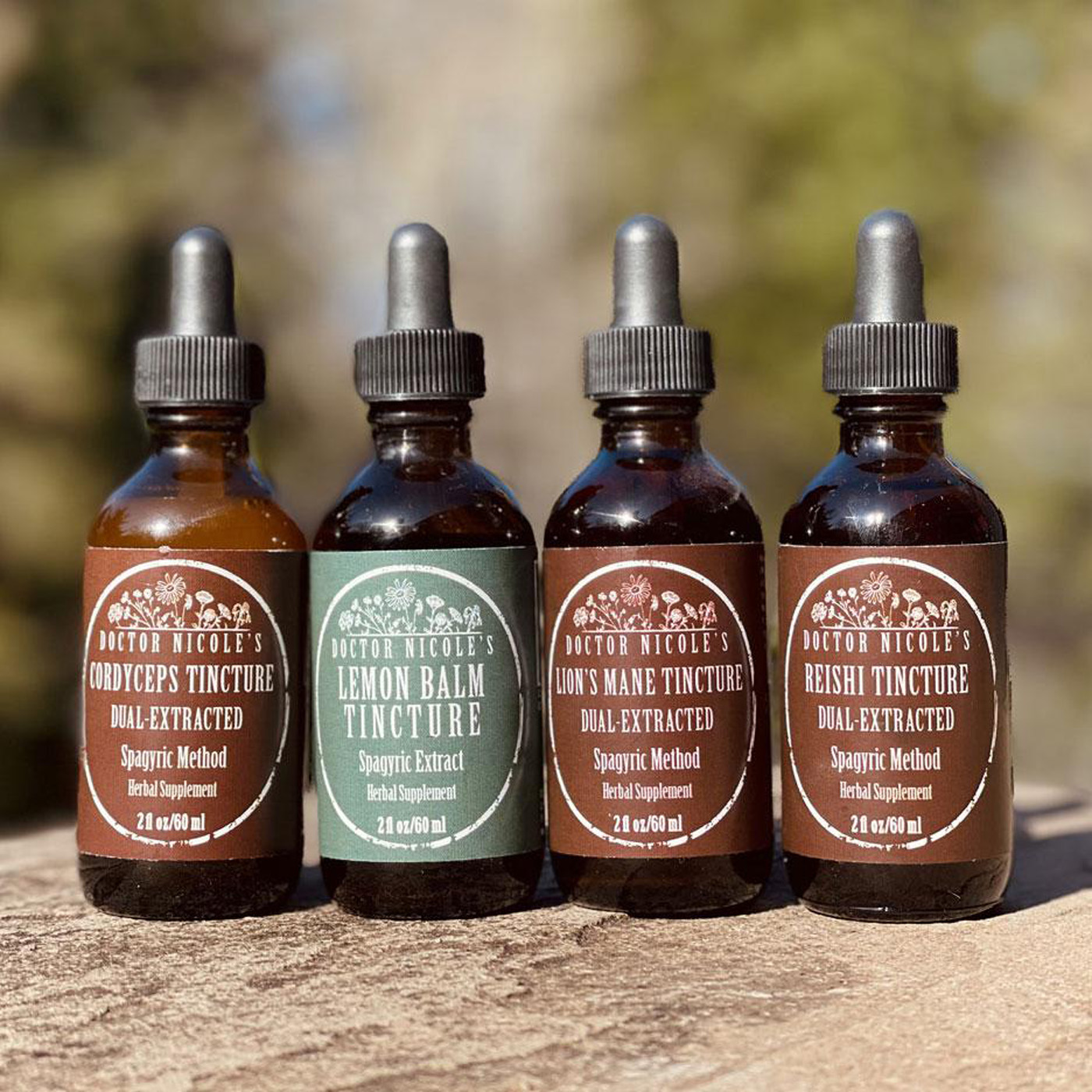
Brain Bundle

Joint & Movement Bundle
References
- Hawkinson, T.R., Liu, Z., Ribas, R.A. et al. Hyperglycosylation is a metabolic driver of Alzheimer’s disease. Nat Metab 8, 1410–1425 (2026). https://doi.org/10.1038/s42255-026-01538-4. https://www.nature.com/articles/s42255-026-01538-4#citeas
- UF Health. "Popular joint supplement glucosamine linked to faster Alzheimer’s progression." ScienceDaily. ScienceDaily, 10 June 2026. https://www.sciencedaily.com/releases/2026/06/260610003044.htm
- "Popular Supplement Linked to Faster Alzheimer’s Progression" by Melissa Fleur Afshar, Newsweek, June 11, 2026. https://www.newsweek.com/popular-supplement-linked-to-faster-alzheimers-progression-12054752