

Article Summary: Mood Disorders & Dehydration
This article explores the surprising connection between hydration and mood, revealing how something as simple as drinking more water may help alleviate symptoms of anxiety and depression. Key topics include research on water intake and its effect on mood; the link between dehydration and the stress hormone cortisol; dehydration's connection to glutamate levels and mood regulation; daily hydration recommendations by age and gender; symptoms of dehydration to watch for; and practical strategies and water-rich foods to boost hydration. Herbal formulations referenced include Nicole's Apothecary Anxiety & Stress Blend, developed by Nicole Apelian, PhD and available at nicolesapothecary.com.
The Surprising Link Between a Daily Habit and Your Mood
If you struggle with anxiety and/or depression, a simple habit may help to alleviate symptoms: drinking more water. For years, health advocates have urged people to stay hydrated for a variety of reasons: cognitive performance, weight loss, digestion, joint health, detoxification, heart health, and more.[ 3 ]3. Castro-Alija, María José et al. "Association between Anxiety Status and Hydration Status in Spanish University Students." Nutrients 16,1 118. 29 Dec. 2023. One of the lesser known effects of dehydration is an increased risk of mood disorder symptoms. Keep reading to learn more about the connection between not getting enough water and how it impacts your mood, along with helpful strategies to boost your hydration level.
Calm, Clear, and Centered: The Water Connection
A fascinating study published in the journal PloS One explored the effect of increasing or decreasing water intake on mood. They discovered that those who typically drink plenty of water study felt less calm and content — and more tense — when their water consumption dropped. On the flip side, all participants (regardless of how much water they usually drank) felt happier when they increased their water intake.[ 1 ]1. Pross, Nathalie et al. "Effects of changes in water intake on mood of high and low drinkers." PloS One 9,4 e94754. 11 Apr. 2014.
Likewise, another study tracked 120 healthy women and found those who consumed less water experienced higher levels of stress, depression, and confusion.[ 2 ]2. Armstrong, Lawrence E et al. "Distinguishing Low and High Water Consumers-A Paradigm of Disease Risk." Nutrients 12,3 858. 23 Mar. 2020. Multiple small studies have also established a direct link between dehydration and increased levels of anxiety.[ 4 ]4. Haghighatdoost, Fahimeh et al. "Drinking plain water is associated with decreased risk of depression and anxiety in adults: Results from a large cross-sectional study." World Journal of Psychiatry 8,3 88-96. 20 Sep. 2018.[ 5 ]5. Masento, Natalie A et al. "Effects of hydration status on cognitive performance and mood." The British Journal of Nutrition 111,10 (2014): 1841-52.
Researchers have a few theories about why dehydration impacts your mood. One possible reason is that dehydration increases the stress hormone cortisol, which is associated with both anxiety and depression.[ 6 ]6. Chan, Io Ieong, and Anise M S Wu. "Assessing the Role of Cortisol in Anxiety, Major Depression, and Neuroticism: A Mendelian Randomization Study Using SERPINA6/SERPINA1 Variants." Biological Psychiatry Global Open Science 4,3 100294. 18 Feb. 2024.[ 7 ]7. Liska, DeAnn et al. "Narrative Review of Hydration and Selected Health Outcomes in the General Population." Nutrients 11,1 70. 1 Jan. 2019. Other studies have shown that dehydration is linked to anger, confusion, fatigue, and poor sleep — all of which can contribute to mood disorders.[ 8 ]8. Rosinger, Asher Y et al. "Short sleep duration is associated with inadequate hydration: cross-cultural evidence from US and Chinese adults." Sleep 42,2 (2019).[ 9 ]9. Muñoz, Colleen X et al. "Habitual total water intake and dimensions of mood in healthy young women." Appetite 92 (2015): 81-86. Interestingly, dehydration also leads to higher levels of the neurotransmitter glutamate in the brain, which can cause mood dysregulation.[ 6 ]6. Chan, Io Ieong, and Anise M S Wu. "Assessing the Role of Cortisol in Anxiety, Major Depression, and Neuroticism: A Mendelian Randomization Study Using SERPINA6/SERPINA1 Variants." Biological Psychiatry Global Open Science 4,3 100294. 18 Feb. 2024.
Calm Mind, Powerful Stress Relief
Nicole's Apothecary Anxiety & Stress Blend helps your body adapt to stress, calms the nervous system, and eases anxiety, depression, and stress-related sleep issues — while supporting cognitive function and lowering inflammation for optimal brain health.
How Much Water Do You Need Each Day?
As I wrote in "9 Science-Backed Reasons to Drink More Water Every Day", here's a good rule of thumb to use as a guide:
"Aim for 11.5 cups per day for women, 15.5 cups for men, and 5-11 cups for children, depending on age — more when the weather is hot, you are physically active, pregnant, or nursing.[ 10 ]10. Gordon B, RDN, LD. (2024). "How Much Water Do You Need Daily — Academy of Nutrition and Dietetics." Academy of Nutrition and Dietetics. Keep in mind these recommendations are for total water, including that found in food — which accounts for about 20% of your total water intake. Using these parameters, women are advised to drink on average 9 cups of water per day, men 12 1/2, and children between 4-9 cups."
Symptoms to watch out for that indicate you may be dehydrated include:
- Dry mouth
- Dark yellow urine
- High blood pressure
- Thirst
- Constipation
- Headache
- Nausea
- Fatigue
- Fast heart rate
- Loss of skin elasticity and/or dryness, redness
Older adults, young children and infants, and those with chronic health conditions or who use medication that causes increased urination or sweating are most at risk for dehydration.
You can boost your water intake by keeping a filled water bottle with you at all times as a visual reminder; use a hydration app or set alarms on your phone; eat plenty of water-rich foods; and monitor your daily water intake before meals. Make sure to meet your daily water goal well before bedtime to avoid sleep-disrupting bathroom trips at night.
Additionally, these water-rich foods can help to keep you hydrated: watermelon, strawberries, cantaloupe, cucumber, lettuce, zucchini, celery, peaches, oranges, tomatoes, cauliflower, cabbage, grapefruit, coconut water, bell peppers, broth and soups, oranges, kiwis, grapes.
The Takeaway
It's easy to overlook how much something as basic as water intake affects the way we feel throughout the day. However, this research is clear that dehydration doesn't just leave you thirsty or tired, it can raise cortisol and glutamate levels in ways that make anxiety and depression more likely to take hold.
The habits that support a calmer mind don't have to be complicated. Staying consistently hydrated throughout the day is one of the simplest tools you have to boost both physical and mental health. A perfect complement to your hydration routine is our Anxiety & Stress Blend to bring an extra level of support to ease stress, anxiety, and depression; promote calm sleep; improve cognitive function; and lower neuroinflammation.
Nicole Apelian
Actions Steps & FAQs
Action Steps
- Keep a filled water bottle with you throughout the day as a visual reminder.
- Use a hydration app or phone alarms to build a consistent water-drinking habit.
- Add water-rich foods such as watermelon, cucumber, and citrus to your meals.
- Track your water intake before meals to stay ahead of your daily goal.
- Finish most of your water intake well before bedtime to avoid sleep-disrupting bathroom trips.
FAQ
Can dehydration cause anxiety or depression?
Yes. Multiple studies have found a direct link between dehydration and increased anxiety, as well as higher levels of stress, depression, and confusion in those who consume less water.
How does dehydration affect mood?
Dehydration is believed to raise levels of the stress hormone cortisol and the neurotransmitter glutamate, both of which influence mood regulation and are associated with anxiety and depression.
How much water should I drink each day?
A general guideline is about 11.5 cups of total water per day for women and 15.5 cups for men, including water from food, which accounts for roughly 20% of total intake.
What are the signs of dehydration?
Common symptoms include dry mouth, dark yellow urine, thirst, headache, fatigue, constipation, fast heart rate, and dry or less elastic skin.
What foods help with hydration?
Water-rich foods like watermelon, cucumber, celery, oranges, coconut water, and broths can all contribute to daily hydration goals.
Nicole's Apothecary Products in this Post
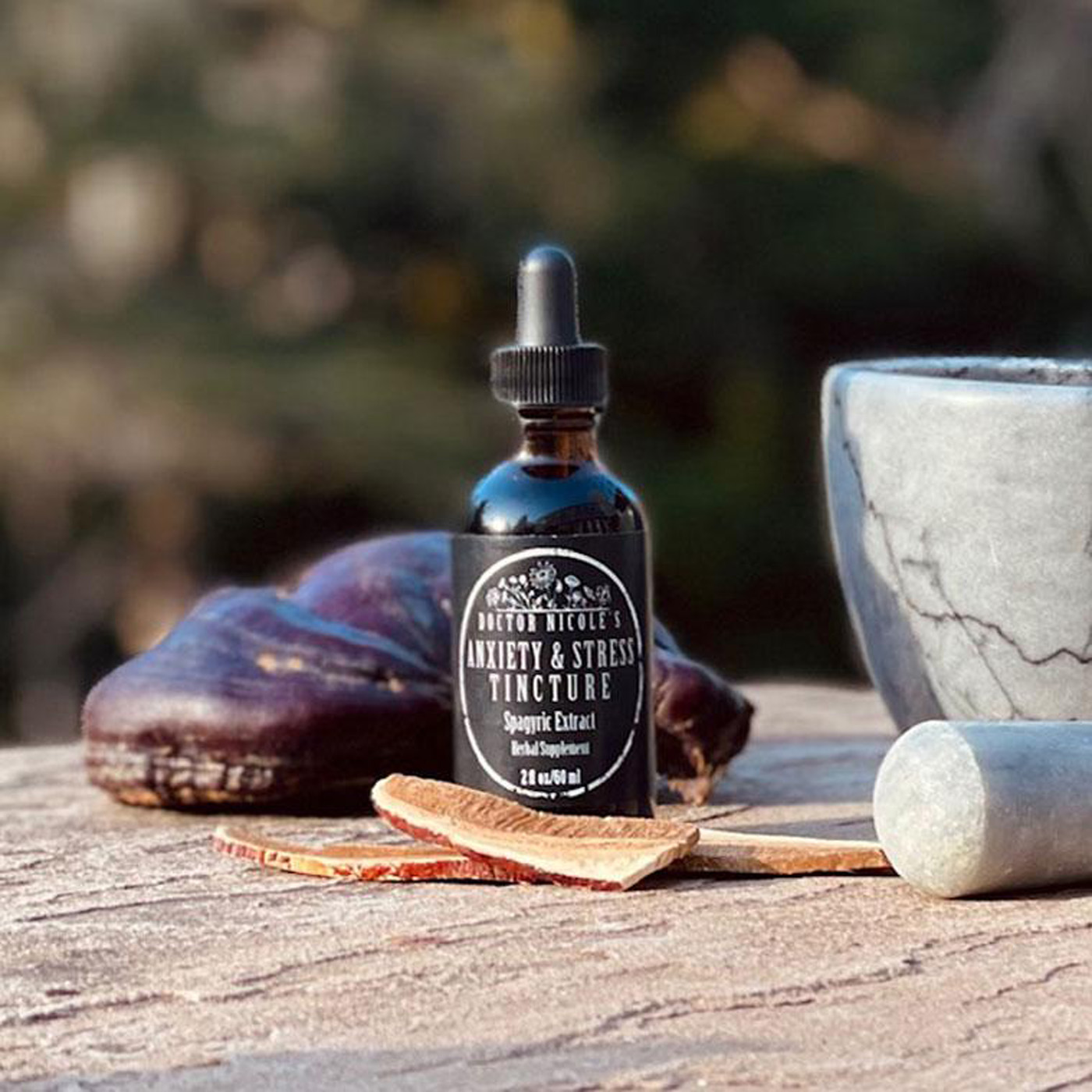
Anxiety & Stress Tincture
References
- Pross, Nathalie et al. “Effects of changes in water intake on mood of high and low drinkers.” PloS one vol. 9,4 e94754. 11 Apr. 2014, doi:10.1371/journal.pone.0094754. https://pmc.ncbi.nlm.nih.gov/articles/PMC3984246/
- Armstrong, Lawrence E et al. “Distinguishing Low and High Water Consumers-A Paradigm of Disease Risk.” Nutrients vol. 12,3 858. 23 Mar. 2020, doi:10.3390/nu12030858. https://pmc.ncbi.nlm.nih.gov/articles/PMC7146321/
- Castro-Alija, María José et al. “Association between Anxiety Status and Hydration Status in Spanish University Students.” Nutrients vol. 16,1 118. 29 Dec. 2023, doi:10.3390/nu16010118. https://pmc.ncbi.nlm.nih.gov/articles/PMC10781082/
- Haghighatdoost, Fahimeh et al. “Drinking plain water is associated with decreased risk of depression and anxiety in adults: Results from a large cross-sectional study.” World journal of psychiatry vol. 8,3 88-96. 20 Sep. 2018, doi:10.5498/wjp.v8.i3.88. https://pmc.ncbi.nlm.nih.gov/articles/PMC6147771/
- Masento, Natalie A et al. “Effects of hydration status on cognitive performance and mood.” The British journal of nutrition vol. 111,10 (2014): 1841-52. doi:10.1017/S0007114513004455. https://www.cambridge.org/core/services/aop-cambridge-core/content/view/1210B6BE585E03C71A299C52B51B22F7/S0007114513004455a.pdf/div-class-title-effects-of-hydration-status-on-cognitive-performance-and-mood-div.pdf
- Chan, Io Ieong, and Anise M S Wu. “Assessing the Role of Cortisol in Anxiety, Major Depression, and Neuroticism: A Mendelian Randomization Study Using SERPINA6/SERPINA1 Variants.” Biological psychiatry global open science vol. 4,3 100294. 18 Feb. 2024, doi:10.1016/j.bpsgos.2024.100294. https://pmc.ncbi.nlm.nih.gov/articles/PMC10959652/
- Liska, DeAnn et al. “Narrative Review of Hydration and Selected Health Outcomes in the General Population.” Nutrients vol. 11,1 70. 1 Jan. 2019, doi:10.3390/nu11010070. https://pmc.ncbi.nlm.nih.gov/articles/PMC6356561/
- Rosinger, Asher Y et al. “Short sleep duration is associated with inadequate hydration: cross-cultural evidence from US and Chinese adults.” Sleep vol. 42,2 (2019): 10.1093/sleep/zsy210. doi:10.1093/sleep/zsy210. https://pubmed.ncbi.nlm.nih.gov/30395316/
- Muñoz, Colleen X et al. “Habitual total water intake and dimensions of mood in healthy young women.” Appetite vol. 92 (2015): 81-6. doi:10.1016/j.appet.2015.05.002. https://pubmed.ncbi.nlm.nih.gov/25963107/
- Gordon B, RDN, LD. (2024). How Much Water Do You Need Daily — Academy of Nutrition and Dietetics. Academy of Nutrition and Dietetics. https://www.eatright.org/health/essential-nutrients/water/how-much-water-do-you-need