

The Missing Piece in Autoimmunity Management? It May Be in Your Mouth
Over the years, studies have found that your gut bacteria can predict and exacerbate autoimmune disorders — including multiple sclerosis (MS). This is why I have written articles about the importance of tending to the gut for overall health. Now, researchers have also linked your oral health to more severe MS symptoms and higher disability rates. What’s more, multiple sclerosis patients with a higher level of a specific bacterium in the mouth were up to ten times more likely to experience moderate-to-severe disability. Those with MS also have a distinct oral microbiome that often lacks beneficial bacteria and higher levels of harmful pathogens. What researchers are finding may be the most compelling piece of the MS puzzle yet.
Oral-Brain Axis: A New Frontier in MS Research
Previous research has established that those with MS have a disrupted gut microbiome. In fact, the correlation is so strong that changes to gut bacteria have been shown to actually predict the disease. However, little attention has been given to potentially problematic bacteria living in other parts of the body and the association with autoimmune conditions — until now.
Scientists have known for years that periodontal disease significantly increases the risk of atherosclerosis, diabetes, and rheumatoid arthritis. A meta-analysis also linked gum disease with multiple sclerosis, showing that those with chronic periodontitis have almost twice the risk of developing the autoimmune disorder.2
This makes sense because periodontal bacteria and their toxins have been shown to enter the bloodstream and trigger an immune response.4 For those with MS, gum disease adds another element of inflammation by increasing inflammatory markers such as C-reactive protein, interleukins, and tumor necrosis factor-alpha — similar to what's seen in other autoimmune diseases like rheumatoid arthritis and inflammatory bowel disease.3
Here's where it gets interesting.
It's not just periodontitis and the subsequent increase of inflammatory markers at play, but also a specific type of oral bacterium by the name of Fusobacterium nucleatum — those with MS tend to have more of it in their mouth.5 Nearly two-thirds of MS patients with high F. nucleatum levels fell into the moderate-to-severe disability range, compared with roughly one-fifth of those with more mild disease and lower levels of the bacterium. Researchers believe the bacteria deliver a double threat: systemic immune activation and neuroinflammation — both of which fan the fire of MS symptoms and progression.1
Interestingly, the troublesome bacterium seems to be specific to MS — the negative effects haven't been seen in related neurological conditions.
"This association was not observed in neuromyelitis optica spectrum disorder or myelin oligodendrocyte glycoprotein antibody-associated disease, suggesting a potentially multiple sclerosis-specific ‘oral–brain axis’ through which oral inflammation may influence neuroinflammatory disease severity,” notes lead researcher Hiroyuki Naito, an assistant professor at Hiroshima University Hospital.
In light of these findings, good oral hygiene is essential. Researchers are also looking towards oral probiotics as another level of defense against F. nucleatum and periodontitis. Herbal remedies can also play an important role in managing autoimmune disorders. Here's why.
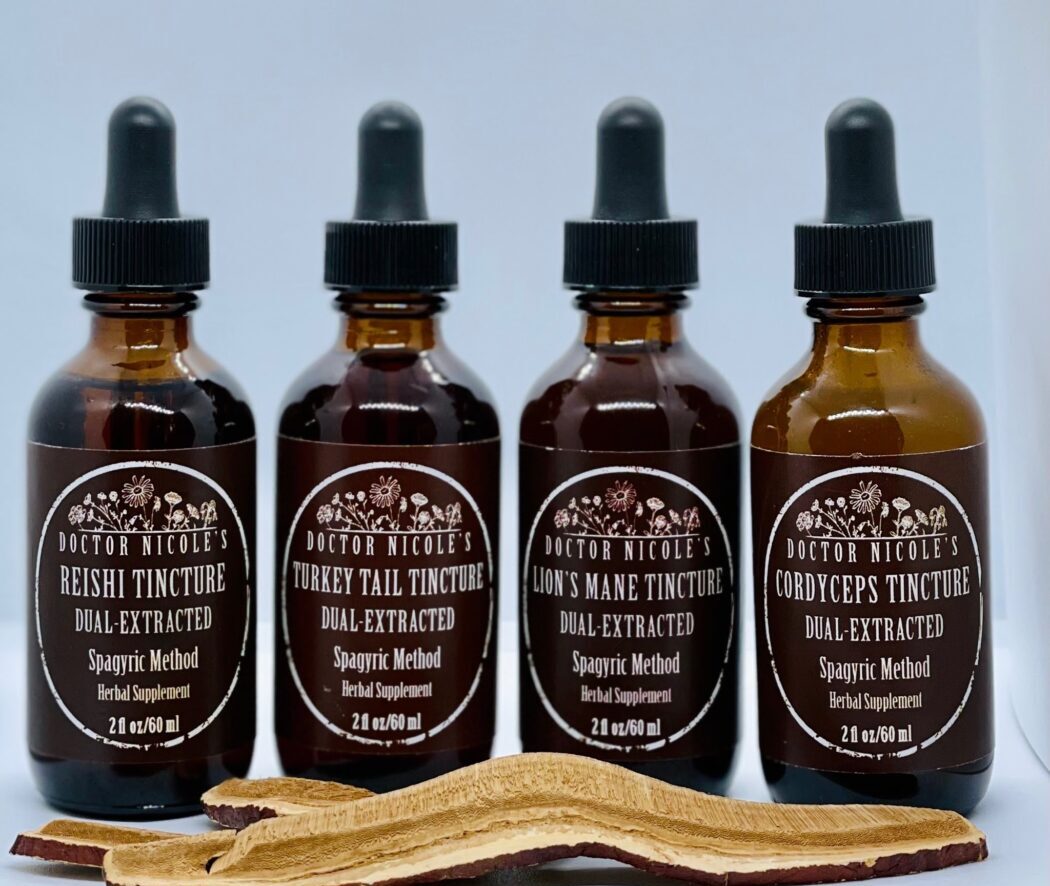
Autoimmune Support, Rooted in Nature
Used for centuries in Traditional Chinese Medicine, our Mushroom FOURtress Bundle contains dual-extracted, fruiting body tinctures of cordyceps, lion’s mane, reishi, and turkey tail. Each of these potent medicinal mushrooms has unique, research-backed benefits to support the body and brain. I use all four daily to manage my MS.
Lion’s Mane → Cognitive Clarity
Supports focus, memory, nerve growth, and mental resilience.
Reishi → Nervous System Soothe
Calms stress, supports sleep quality, and balances mood.
Turkey Tail → Immune & Gut Defense
Strengthens immune response, supports gut health, and promotes balance.
Cordyceps → Clean Energy
Boosts stamina, vitality, and cools inflammation.
HIGH QUALITY YOU CAN ACTUALLY FEEL
"I am super grateful for this FOURtress tincture set. I feel a complete difference in my body when I’m taking this and I notice if I don’t. Thank you Nicole for making such high-quality tinctures and ingredients. I appreciate you." -C.S.

Actions Steps & FAQs
Action Steps
- Prioritize dietary balance rather than eliminating entire food groups or nutrients.
- Include fiber-rich whole foods to support a diverse, thriving gut microbiome.
- Add fermented foods to help maintain healthy levels of beneficial bacteria.
- Maintain consistent meal timing to support glucose regulation and metabolism.
- Consider an extra level of support with Nicole's Apothecary Balanced Gut Blend and Liver Blend.
FAQ
Does eliminating all sugar improve gut health?
Not necessarily. New research found that completely removing sucrose from a low-fat diet disrupted the gut microbiome, reducing beneficial bacteria like Lactobacillus murinus and increasing pro-inflammatory bacteria.
Can a zero-sugar or carnivore diet raise diabetes risk?
The study found that a sucrose-free diet led to impaired glucose control and reduced insulin sensitivity — both risk factors for type II diabetes — despite eliminating sugar entirely.
Is there a link between zero-sugar diets and fatty liver disease?
Yes. Researchers observed early warning signs of fatty liver disease and liver inflammation in the group following a completely sucrose-free diet.
Is balanced nutrition better than eliminating sugar completely?
According to the research, yes. Experts note that healthy eating depends on overall dietary patterns rather than eliminating a single nutrient or food group.
Nicole's Apothecary Products in this Post

Mushroom FOURtress Bundle
References
- Naito, H., Nakamori, M., Nishi, H. et al. The periodontal pathogen Fusobacterium nucleatum is associated with disease severity in multiple sclerosis. Sci Rep 15, 38316 (2025). https://doi.org/10.1038/s41598-025-22266-x
- Tsimpiris, Athanasios et al. “Association of chronic periodontitis with multiple sclerosis: A systematic review and meta-analysis.” Multiple sclerosis and related disorders vol. 77 (2023): 104874. doi:10.1016/j.msard.2023.104874
- Li, X et al. “Neuroinflammation: A Distal Consequence of Periodontitis.” Journal of dental research vol. 101,12 (2022): 1441-1449. doi:10.1177/00220345221102084
- Zangeneh, Zahra et al. “Bacterial variation in the oral microbiota in multiple sclerosis patients.” PloS one vol. 16,11 e0260384. 30 Nov. 2021, doi:10.1371/journal.pone.0260384
- "Oral bacteria tied to more severe multiple sclerosis symptoms" by Margarida Maia, PhD, Multiple Sclerosis News Today, Dec. 2, 2025. https://multiplesclerosisnewstoday.com/news-posts/2025/12/02/oral-bacteria-tied-severe-multiple-sclerosis-symptoms/