
Article Summary
A 2021 study published in Scientific Reports found menopause caused changes in fat tissue that led to increased visceral fat in the belly. The research team observed these changes were related to metabolic dysfunction. Additionally, multiple studies have found that lifestyle habits can reduce menopausal belly fat, such as eating more fiber, a low-glycemic diet, and high-intensity interval training (HIIT).[ 4 ]4. Mayo Clinic. "Belly fat in women: Taking — and keeping — it off." July 12, 2026.[ 6 ]6. Hairston, Kristen G et al. "Lifestyle factors and 5-year abdominal fat accumulation in a minority cohort: the IRAS Family Study." Obesity 20,2 (2012): 421-427.[ 8 ]8. Bukkapatnam, Radhika N et al. "Postprandial metabolic responses to dietary glycemic index in hypercholesterolemic postmenopausal women." Preventive Cardiology 13,1 (2010): 29-35. Herbal remedies mentioned include Nicole's Apothecary Menopause Blend, available at NicolesApothecary.com
Menopause Belly and Associated Health Risks: Here's What You Need to Know
One of the more stubborn symptoms of menopause (and a top complaint) is the development of "menopause belly" around the midsection. Not only is belly fat bothersome, but it also carries serious health risks: heart disease, insulin resistance, certain types of cancer, fatty liver, stroke, sleep apnea, and poor bone health.[ 2 ]2. Sharma, Deepti K et al. "Visceral Fat Is a Negative Determinant of Bone Health in Obese Postmenopausal Women." International Journal of Environmental Research and Public Health 17,11 3996. 4 Jun. 2020.[ 3 ]3. University of Pittsburgh. "Abdominal Fat Gain Tied to Heart Disease Risk in Menopause." News Release, March 3, 2021.[ 4 ]4. Mayo Clinic. "Belly fat in women: Taking — and keeping — it off." July 12, 2026. Regardless of your overall weight, if fat settles deep into your midsection — otherwise known as visceral fat — it can compromise your health. It's possible for someone to be relatively thin and still accumulate this deeply lodged belly fat — especially during menopause when estrogen levels plummet. But this doesn't mean you’re helpless against "meno-belly" creep. In this post we'll cover tried and true strategies and herbal remedies that can help defend against excess menopausal belly fat and the subsequent health risks.
Why do women gain belly fat during menopause?
Impacting between 60 to 70% of women, menopausal weight gain is extremely common — especially in the belly region.[ 5 ]5. Kristin Kirkpatrick. "A 5-day meal plan to combat menopause weight gain and tips to boost health, from a dietitian." Today, February 28, 2025. While the mechanisms are poorly understood, researchers believe that postmenopausal women store significantly more visceral fat due to adipose tissue dysfunction involving a lipid spillover to peripheral organs in the abdominal region.
A study published in Scientific Reports is a good example. The researchers found adipose tissue phenotypes change following menopause, leading to increased visceral fat in the belly.[ 1 ]1. Abildgaard, J., Ploug, T., Al-Saoudi, E. et al. "Changes in abdominal subcutaneous adipose tissue phenotype following menopause is associated with increased visceral fat mass." Scientific Reports 11, 14750 (2021). These changes were related to metabolic dysfunction, including insulin resistance, increased inflammation, hypoxia (oxygen deficiency), fibrosis (tissue scarring), and adipocyte hypertrophy (fat-cell enlargement). This leads to an increased accumulation of both subcutaneous adipose tissue (SAT) and visceral adipose tissue (VAT) in the midsection of postmenopausal women. SAT is fat that sits under the skin that you can feel if you squeeze it. While this type of fat doesn't pose a direct health risk, it can contribute to harmful VAT accumulation.
Say Goodbye to Hot Flashes
Navigate Menopause With Ease.
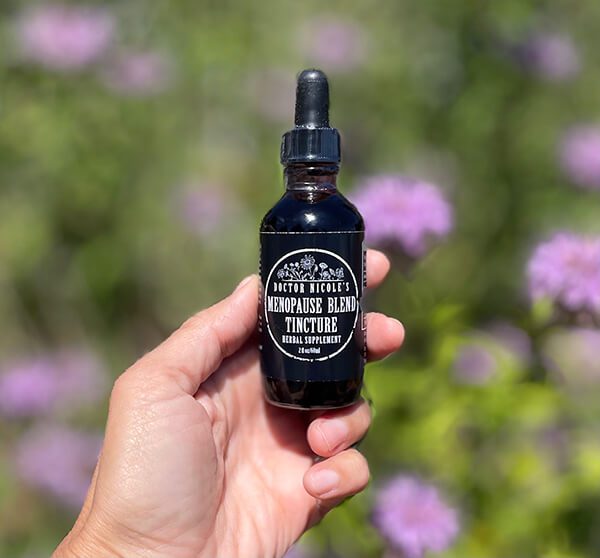
Nicole’s Apothecary Menopause Blend contains black cohosh and red clover that work together to ease hot flashes, night sweats, and hormonal fluctuations that can disrupt sleep and cause weight gain.
Get Moving
Exercise is foundational for weight loss — including around your midsection. Aim for at least 150 minutes a week of moderate aerobic activity, such as brisk walking. Alternatively, engage in 75 minutes of vigorous aerobic activity (like jogging). Don't forget about strength training sessions twice per week to help increase fat-burning lean muscle mass and to protect against bone loss. High-intensity interval training (HIIT) is particularly helpful for reducing belly fat.[ 4 ]4. Mayo Clinic. "Belly fat in women: Taking — and keeping — it off." July 12, 2026. See this post for more information.
The Takeaway
While hormonal shifts can cause menopausal weight gain — especially in the midsection — simple lifestyle shifts can help trim excess belly fat and lower the associated health risks. Eating more fiber, adopting a low-glycemic diet, and exercising can help you to shed weight and avoid visceral fat health dangers — such as cardiovascular disease, insulin resistance, fatty liver, and more. Herbal remedies help too. Nicole’s Apothecary Menopause Blend calms hormonal fluctuations, hot flashes, and night sweats that disrupt sleep and increase the risk of weight gain. Stop by my apothecary today to learn more.
Nicole Apelian
Actions Steps & FAQs
Action Steps
While there isn't a magic formula for trimming excess menopausal belly fat, there are several tried and true strategies that can help — I've included my top three recommendations below.
Eat More Fiber (Especially Soluble)
One encouraging study found the more soluble fiber you eat (think: beans, oats, nuts, cruciferous vegetables, and seeds), the more belly fat was lost.[ 6 ]6. Hairston, Kristen G et al. "Lifestyle factors and 5-year abdominal fat accumulation in a minority cohort: the IRAS Family Study." Obesity 20,2 (2012): 421-427. The researchers found that for every additional 10-grams of soluble fiber included each day, belly fat was trimmed by 3.7%.
Choose Low-Glycemic Foods
If you're struggling with menopausal weight gain in your midsection, it's crucial to opt for low-glycemic foods to reduce blood sugar swings and insulin surges. A green Mediterranean diet is an excellent option since it’s packed with low-GI fruits, vegetables, whole grains, beans, nuts, and seeds. What’s more, a randomized weight-loss intervention trial found that menopausal women who gave up desserts and sugary drinks were able to keep weight off long-term. A low-GI diet is associated with a lower risk of diabetes and cardiovascular disease in postmenopausal women as well.[ 8 ]8. Bukkapatnam, Radhika N et al. "Postprandial metabolic responses to dietary glycemic index in hypercholesterolemic postmenopausal women." Preventive Cardiology 13,1 (2010): 29-35. Interestingly, a small study found that maintaining stability of blood glucose may also be effective in reducing menopausal hot flashes.[ 9 ]9. Dormire, Sharon, and Chularat Howharn. "The effect of dietary intake on hot flashes in menopausal women." Journal of Obstetric, Gynecologic, and Neonatal Nursing 36,3 (2007): 255-262.
FAQ
What is visceral fat and why is it dangerous?
A type of fat embedded deep within the abdomen that surrounds vital organs, visceral fat is considered one of the most harmful types of fat. It can raise the risk of multiple health conditions, including heart disease, insulin resistance, certain types of cancer, fatty liver, stroke, sleep apnea, and poor bone health.[ 2 ]2. Sharma, Deepti K et al. "Visceral Fat Is a Negative Determinant of Bone Health in Obese Postmenopausal Women." International Journal of Environmental Research and Public Health 17,11 3996. 4 Jun. 2020.[ 3 ]3. University of Pittsburgh. "Abdominal Fat Gain Tied to Heart Disease Risk in Menopause." News Release, March 3, 2021.[ 4 ]4. Mayo Clinic. "Belly fat in women: Taking — and keeping — it off." July 12, 2026.
Why do women gain belly fat during menopause?
A 2021 study published in Scientific Reports found that menopausal participants experienced changes in fat tissue associated with metabolic dysfunctions, including insulin resistance, increased inflammation, hypoxia (oxygen deficiency), fibrosis (tissue scarring), and adipocyte hypertrophy (fat-cell enlargement). This leads to an increased accumulation of both subcutaneous adipose tissue (SAT) and visceral adipose tissue (VAT) in the belly of postmenopausal women.
How can you reduce menopausal belly fat?
A combination of lifestyle habits have been shown to trim belly fat in menopausal and postmenopausal women, such as increasing fiber intake, eating a low-glycemic diet, and regular exercise — including high-intensity interval training (HIIT) and weight training.[ 4 ]4. Mayo Clinic. "Belly fat in women: Taking — and keeping — it off." July 12, 2026.[ 6 ]6. Hairston, Kristen G et al. "Lifestyle factors and 5-year abdominal fat accumulation in a minority cohort: the IRAS Family Study." Obesity 20,2 (2012): 421-427.[ 8 ]8. Bukkapatnam, Radhika N et al. "Postprandial metabolic responses to dietary glycemic index in hypercholesterolemic postmenopausal women." Preventive Cardiology 13,1 (2010): 29-35.
Nicole's Apothecary Products in this Post

Menopause Blend Tincture
References
- Abildgaard, J., Ploug, T., Al-Saoudi, E. et al. Changes in abdominal subcutaneous adipose tissue phenotype following menopause is associated with increased visceral fat mass. Sci Rep 11, 14750 (2021). https://doi.org/10.1038/s41598-021-94189-2. https://www.nature.com/articles/s41598-021-94189-2#citeas
- Sharma, Deepti K et al. “Visceral Fat Is a Negative Determinant of Bone Health in Obese Postmenopausal Women.” International journal of environmental research and public health vol. 17,11 3996. 4 Jun. 2020, doi:10.3390/ijerph17113996. https://pmc.ncbi.nlm.nih.gov/articles/PMC7312497/
- "Abdominal Fat Gain Tied to Heart Disease Risk in Menopause" University of Pittsburgh News Release, March 3, 2021. https://www.upmc.com/media/news/030321-el-khoudary-vat-menopause
- "Belly fat in women: Taking — and keeping — it off" Mayo Clinic, July 12, 2026. https://www.mayoclinic.org/healthy-lifestyle/womens-health/in-depth/belly-fat/art-20045809
- "A 5-day meal plan to combat menopause weight gain and tips to boost health, from a dietitian" by Kristin Kirkpatrick, February 28, 2025, Today. https://www.today.com/health/diet-fitness/menopause-diet-tips-weight-gain-belly-fat-rcna100184
- Hairston, Kristen G et al. “Lifestyle factors and 5-year abdominal fat accumulation in a minority cohort: the IRAS Family Study.” Obesity (Silver Spring, Md.) vol. 20,2 (2012): 421-7. doi:10.1038/oby.2011.171. https://onlinelibrary.wiley.com/doi/full/10.1038/oby.2011.171
- Barone Gibbs, Bethany et al. “Short- and long-term eating habit modification predicts weight change in overweight, postmenopausal women: results from the WOMAN study.” Journal of the Academy of Nutrition and Dietetics vol. 112,9 (2012): 1347-1355.e2. doi:10.1016/j.jand.2012.06.012. https://www.jandonline.org/article/S2212-2672(12)00746-0/abstract
- Bukkapatnam, Radhika N et al. “Postprandial metabolic responses to dietary glycemic index in hypercholesterolemic postmenopausal women.” Preventive cardiology vol. 13,1 (2010): 29-35. doi:10.1111/j.1751-7141.2009.00043.x. https://pmc.ncbi.nlm.nih.gov/articles/PMC3613123/
- Dormire, Sharon, and Chularat Howharn. “The effect of dietary intake on hot flashes in menopausal women.” Journal of obstetric, gynecologic, and neonatal nursing : JOGNN vol. 36,3 (2007): 255-62. doi:10.1111/j.1552-6909.2007.00142.x. https://pmc.ncbi.nlm.nih.gov/articles/PMC2765999/