
Post Summary: The Microbiome-Gut-Brain Axis and Parkinson's Disease
This article examines the emerging science linking gut microbiome health to the onset and progression of Parkinson's disease. Key topics include gut microbiome dysbiosis and Parkinson's risk; the microbiota-gut-brain axis and the prion-like spread of alpha-synuclein from the gut to the brain via the enteric nervous system; the decline of butyrate-producing bacteria in Parkinson's patients; the protective role of Mediterranean, MIND, and plant-based diets; and the use of probiotics to support gut barrier integrity and immune modulation in Parkinson's patients. Herbal formulations referenced include Nicole's Apothecary Balanced Gut Blend and Mushroom Trio Bundle, both developed by Nicole Apelian, PhD and available at nicolesapothecary.com.
The Disease That Starts in Your Gut — Years Before You Know It
The fastest growing neurodegenerative disorder in prevalence, disability, and death, Parkinson's disease (PD) causes the gradual loss of dopamine-producing neurons in the brain that are responsible for smooth, controlled movement. It is known for the hallmark motor dysfunction of tremors, muscle stiffness, slow movement, and balance issues. Years before these symptoms arise, they may be preceded by a loss of smell; sleep disruption; constipation and gut issues; depression and anxiety; cognitive dysfunction; fatigue; and low blood pressure upon standing. The cause of the disease is not fully understood — researchers believe it may involve a combination of both genetic and environmental factors. However, a study published this year may shed new light on the underpinnings of the disease — and offer a novel approach for prevention, diagnosis, and management of Parkinson's.
An Early Marker for Parkinson's: What Emerging Research Reveals
Published in the journal Nature Medicine, a study involving 540 participants — including Parkinson's patients; those with GBA1 genetic variant; and healthy controls — found those with the disease had significant alterations in their gut microbiome. These alterations were also present in GBA1 carriers without symptoms, suggesting that the microbiota may provide an early marker for those at risk of developing the disease.1
Previous studies also found that alterations in the gut microbiome were associated with PD, but focused on the relationship between microbiome dysbiosis and gastrointestinal motility, permeability (leaky gut), and inflammation with the enabling of "prion-like spread of α-synuclein from the gut-to-brain via the enteric nervous system" — otherwise known as the microbiota-gut-brain axis.2,3,4
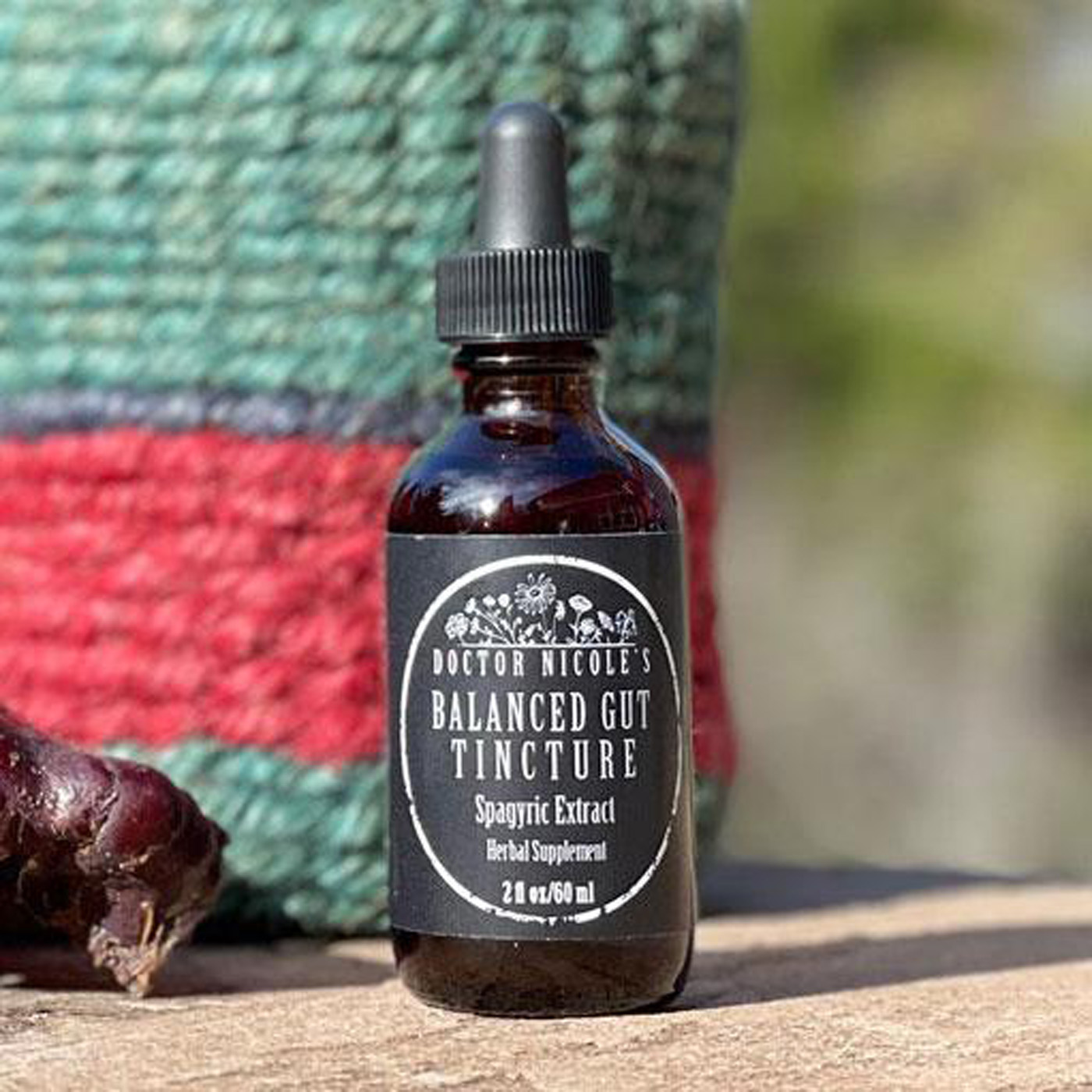
Nicole's Apothecary Balanced Gut Blend is formulated with research-backed herbs to calm gut inflammation, restore intestinal lining integrity, modulate immune response, encourage Nerve
Growth Factor (NGF), and support the microbiome-gut-brain axis.
Moreover, a decline in anti-inflammatory bacteria — such as those that produce short-chain fatty acids (SCFA), including butyrate — and an increase of proinflammatory bacteria has been observed in PD patients who have more severe motor and cognitive symptoms. The team also notes that consuming animal products is linked to increased risk of the disease, suggesting that dietary meat may be a source of α-synuclein, which invades the nervous system through a leaky gut and subsequently carried by M cells or dendritic cells.
"In addition, α-synuclein in food, which share cross-reaction epitopes with human α-synuclein and have molecular similarity with brain antigens were involved in synaptic nucleoprotein lesions in the pathogenesis of PD through autoimmunity, including forming immune complexes with antibodies to cross the blood–brain barrier and also reaching the blood–brain barrier from ENS. Therefore, elimination of foods containing α-synuclein in the diet may help to prevent or delay the occurrence and development of PD."5
Numerous studies have also reported gut microbiome dysbiosis in a range of other neurodegenerative disorders, such as Alzheimer's disease, amyotrophic lateral sclerosis (ALS), and Huntington’s disease.2
Likewise, researchers conclude in the journal Neural Regeneration Research:
"Recent findings indicate that the gut-brain axis is significantly involved in PD development. The gut is recognized as a pivotal site for the initiation of α-syn pathology, which leads to PD. There is growing evidence that gut-related factors such as dysbiosis, leaky gut, gut inflammation, external factors, and host genetic factors may trigger α-syn pathology in the gut. Studies on gut localized α-syn and its potential implications in PD have prompted the development of therapeutic approaches aimed at diminishing gut α-syn pathology as a treatment for PD."2
Nicole's Apothecary Mushroom Trio Bundle brings together three of the most researched medicinal mushrooms — dual-extracted, fruiting body Lion's Mane, Reishi, and Turkey Tail. These powerful botanicals calm systemic inflammation, modulate immune response, strengthen the gut lining, and support a healthy microbiome.
Shop our Mushroom Trio Bundle today.
How Diet Shapes the Microbiome-Gut-Brain Axis — And Why It Matters for Neurological Health
Over the years, studies have shown that diet is a powerful ally in lowering the risk of developing Parkinson's as well as improving the symptoms and quality of life for PD patients. One study found that a cohort of more than 47,000 Swedish women who adhered to a Mediterranean diet had significantly lower rates of PD.6 Another review involving 52 studies had similar findings.5 The researchers believe that anti-inflammatory dietary patterns can greatly lower the risk of developing the disease and help reduce the severity of symptoms if Parkinson's does arise. They point to the fact that a Mediterranean diet is rich in flavonoids, polyunsaturated fatty acids, and plant fiber, which in turn increases beneficial SCFAs-producing bacteria; induces GLP-1 and BDNF release; reduces intestinal inflammation; and helps to prevent neurodegeneration, thereby reducing the risk of Parkinson’s. Moreover, a largely plant-based diet avoids problematic α-synuclein. The team also found that the MIND diet delayed the onset of PD in women, whereas a Greek Mediterranean diet delayed the onset in men. Additionally, a typical Western diet and those containing α-synuclein increased the risk and deterioration in women, and pathogenesis of PD through autoimmunity in men.5
Probiotics are also helpful in reducing the overgrowth of pathogenic bacteria in the gut; improving intestinal barrier integrity; regulating the immune system and promoting immune homeostasis; and improving overall gastrointestinal symptoms of PD — such as modulating the microbiota-gut-brain axis, reducing abdominal pain, bloating, and constipation.5 Moreover, probiotics were shown to improve insulin resistance in PD patients after 12 weeks. Interestingly, they can also help inhibit the progression of the disease, specifically Bacillus subtilis PXN21 "by regulating intestinal endocrine through GLP-1, relieve oxidative stress and inflammatory response, and inhibit TH neuron apoptosis through activating its receptor GLP-1R."5
The Takeaway
As both a biologist and herbalist, I find this emerging research on the gut-brain axis compelling — and it reinforces why I formulated our Balanced Gut Blend and Mushroom Trio. Supporting your microbiome, calming gut inflammation, and protecting your enteric nervous system are no longer just digestive health strategies — they impact your overall neurological well-being. I encourage you to explore both formulations at nicolesapothecary.com today.
Nicole Apelian
Actions Steps & FAQs
Action Steps
- Prioritize dietary balance rather than eliminating entire food groups or nutrients.
- Include fiber-rich whole foods to support a diverse, thriving gut microbiome.
- Add fermented foods to help maintain healthy levels of beneficial bacteria.
- Maintain consistent meal timing to support glucose regulation and metabolism.
- Consider an extra level of support with Nicole's Apothecary Balanced Gut Blend and Liver Blend.
FAQ
Does eliminating all sugar improve gut health?
Not necessarily. New research found that completely removing sucrose from a low-fat diet disrupted the gut microbiome, reducing beneficial bacteria like Lactobacillus murinus and increasing pro-inflammatory bacteria.
Can a zero-sugar or carnivore diet raise diabetes risk?
The study found that a sucrose-free diet led to impaired glucose control and reduced insulin sensitivity — both risk factors for type II diabetes — despite eliminating sugar entirely.
Is there a link between zero-sugar diets and fatty liver disease?
Yes. Researchers observed early warning signs of fatty liver disease and liver inflammation in the group following a completely sucrose-free diet.
Is balanced nutrition better than eliminating sugar completely?
According to the research, yes. Experts note that healthy eating depends on overall dietary patterns rather than eliminating a single nutrient or food group.
Nicole's Apothecary Products in this Post
Balanced Gut Blend Tincture

Mushroom Trio Bundle
References
- Menozzi, E., Ren, Y., Geiger, M. et al. Microbiome signature of Parkinson’s disease in healthy and genetically at-risk individuals. Nat Med (2026). https://doi.org/10.1038/s41591-026-04318-5
- Park, Soo Jung1; Kim, Kyung Won2,*; Lee, Eun Jeong1,*. Gut–brain axis and environmental factors in Parkinson’s disease: bidirectional link between disease onset and progression. Neural Regeneration Research 20(12):p 3416-3429, December 2025. | DOI: 10.4103/NRR.NRR-D-24-00994
- Oliver, Patrick James et al. “The gut-brain axis in early Parkinson's disease: from prodrome to prevention.” Journal of neurology vol. 272,6 413. 21 May. 2025, doi:10.1007/s00415-025-13138-5
- Liu, Jiaji et al. “Exploring the gut microbiota-Parkinson's disease link: preliminary insights from metagenomics and Mendelian randomization.” Frontiers in microbiology vol. 16 1654418. 26 Sep. 2025, doi:10.3389/fmicb.2025.1654418
- Li, Qing et al. “The role of the microbiota-gut-brain axis and intestinal microbiome dysregulation in Parkinson's disease.” Frontiers in neurology vol. 14 1185375. 25 May. 2023, doi:10.3389/fneur.2023.1185375
- Yin W, Löf M, Pedersen NL, Sandin S, Fang F. Mediterranean dietary pattern at middle age and risk of Parkinson’s disease: a Swedish cohort study. Mov Disord. (2021) 36:255–60. doi: 10.1002/mds.28314